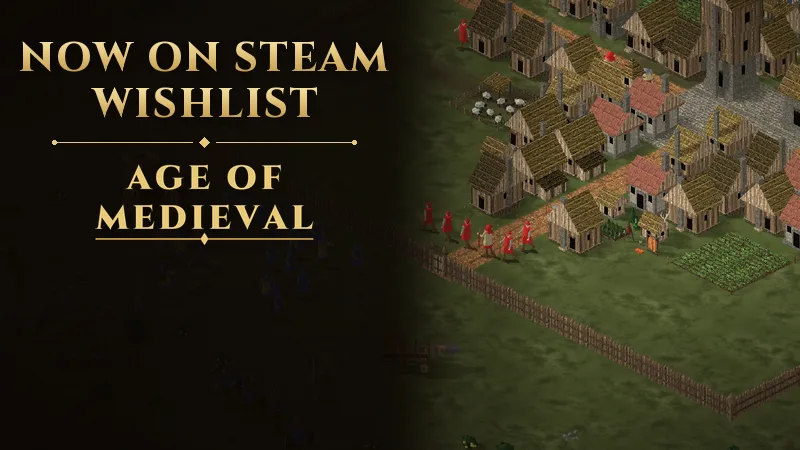
Age of Medieval is now on Steam: wishlist it
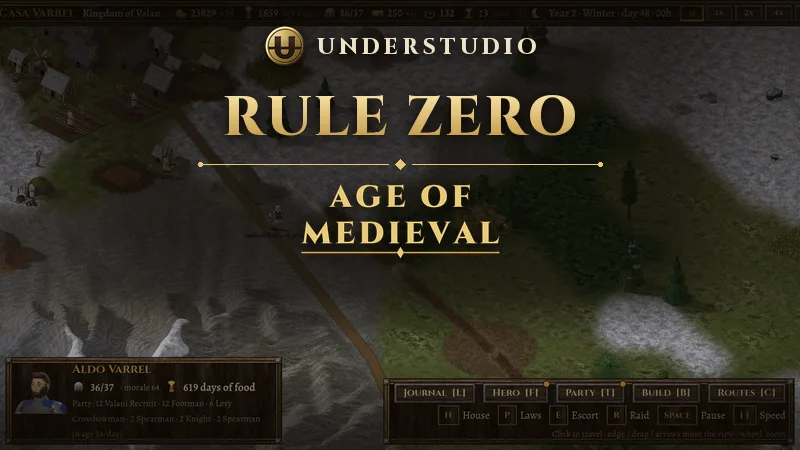
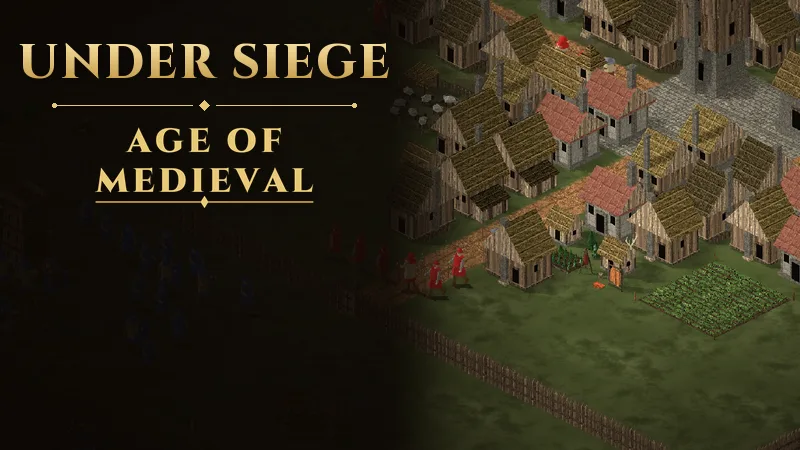
The store page is live. Found a village with a hero, four families and one cart, and defend it in sieges fought inside the town you built. Releases 17 May 2027.
Announcements from the game, the studio and the publisher. The same posts go out on Steam.
The store page is live. Found a village with a hero, four families and one cart, and defend it in sieges fought inside the town you built. Releases 17 May 2027.
Age of Medieval, the first game from UnderStudio, is now public on Steam as Coming Soon. What this page will be used for from here to launch.
Our next release now has a public Steam page. The date is 17 May 2027, the price is US$ 17.99, and you can wishlist it today.
New here? Four short clips show the whole game: found a village, draw its walls, trade by road, and command the battle for it.
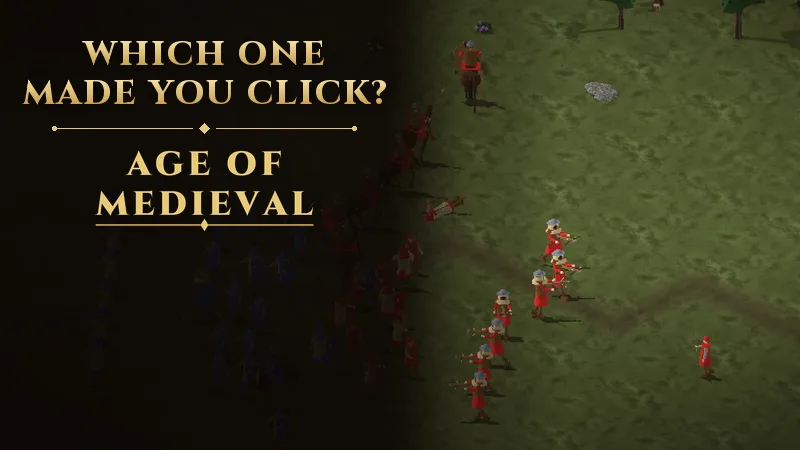
The store page opens with four screenshots: a siege, a field battle, a founder's village and the winter map. Tell us which one brought you in.
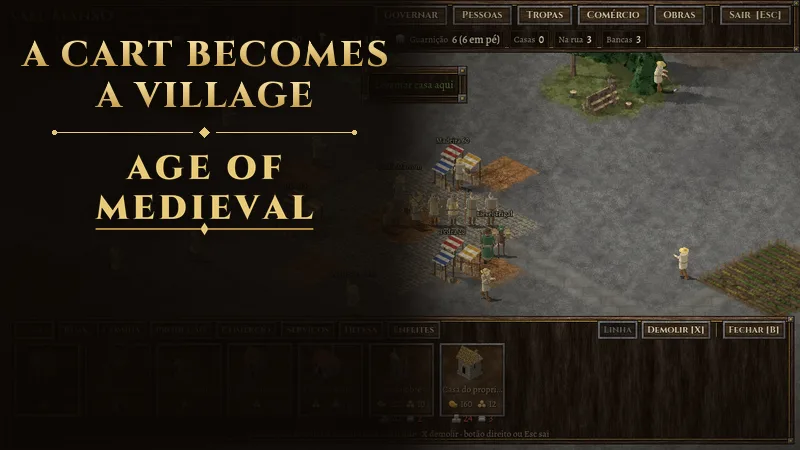
How the game starts: 60 wood, 20 stone, 60 food, 12 tools and 48 firewood in one cart, and a map where you choose the ground for your village.
Age of Medieval runs on UnderStudio 2D, our in-house build of an open-source engine. What having our own build gives a small studio.
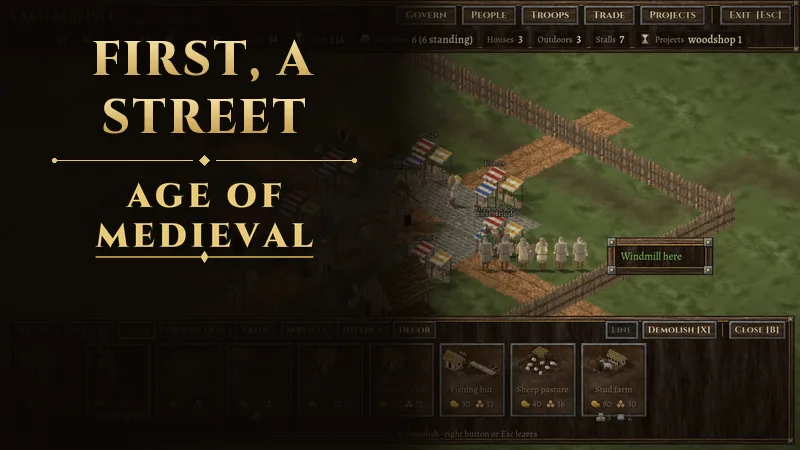
In your village a house only goes up beside a street, so the first click after founding is a road out of the square. The ghost tells you why before you pay.
Why every studio asks for wishlists before launch, in plain terms: who Steam shows the game to, and what you get back for the click.
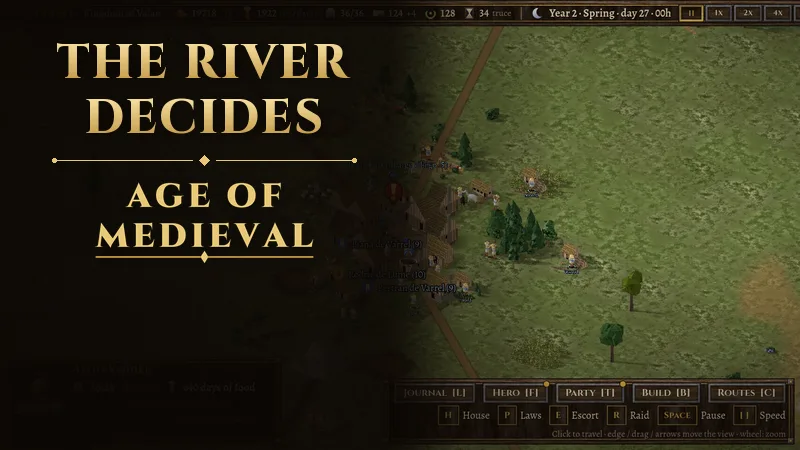
You have one cart and four families. Do you found by the river, by the forest or by the road? Each choice costs you something else.
In Age of Medieval the assault map is your real village plan: houses are obstacles, streets are paths, and the ram hits the gate where you put it.
The store description is available in 19 languages and the game interface in 18, with English and Brazilian Portuguese as the reference texts.
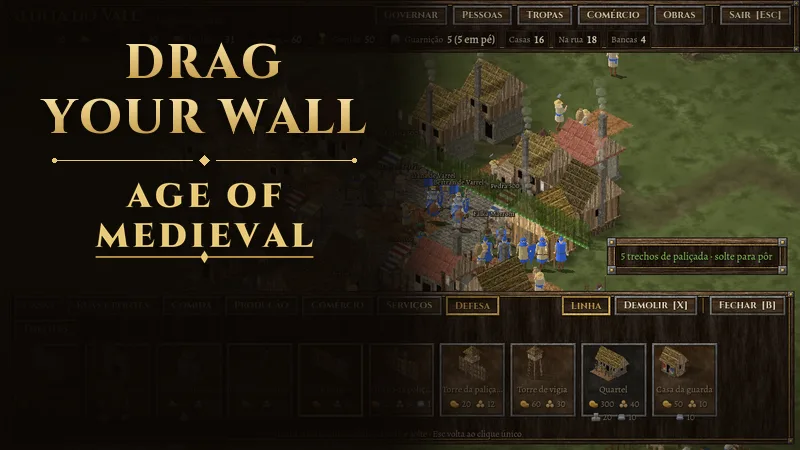
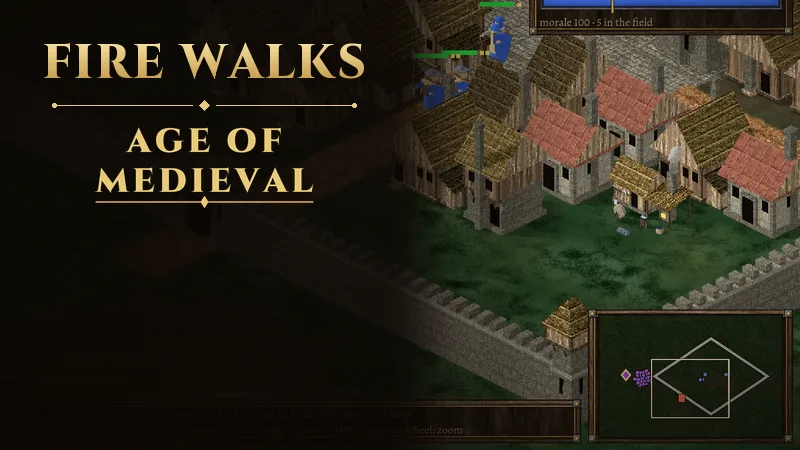
Walls are not buildings here. Click an edge of the ground, drag, and the palisade follows; a gate or a tower replaces any stretch you choose.
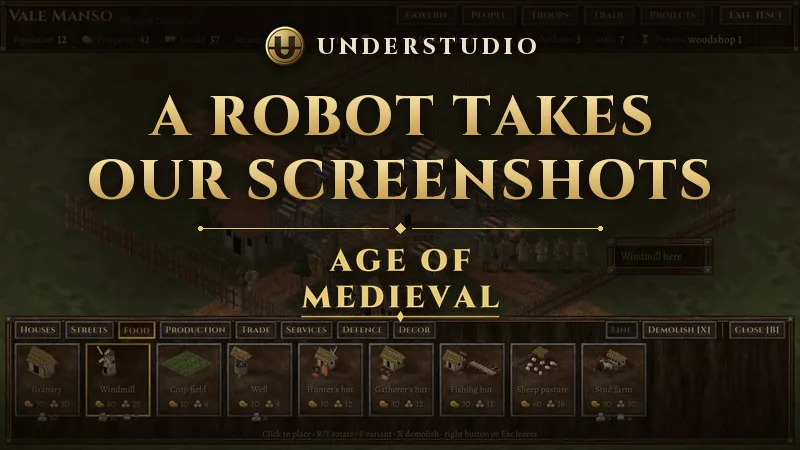
Every screenshot on the store page was taken by a script that drives the game from the inside. The same scripts are our tests.
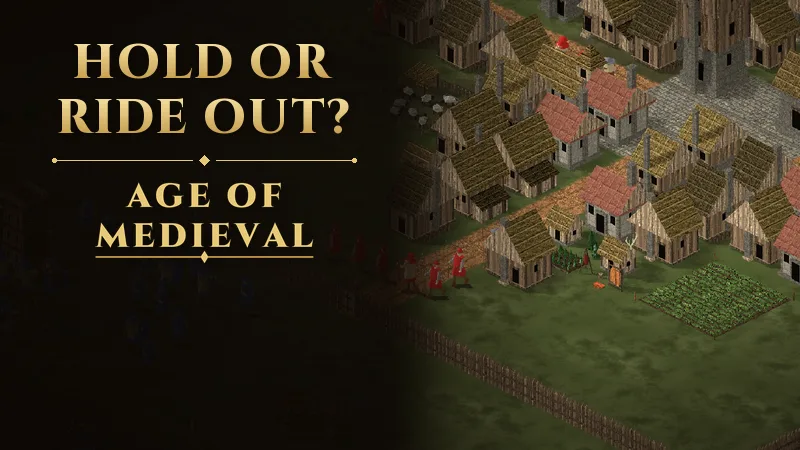
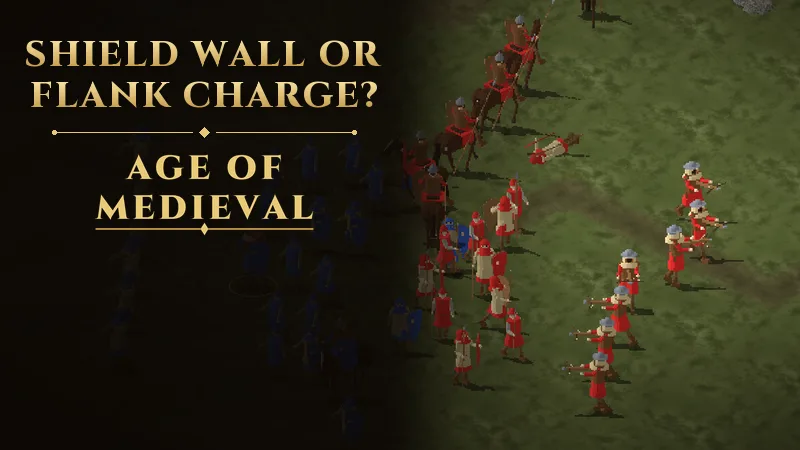
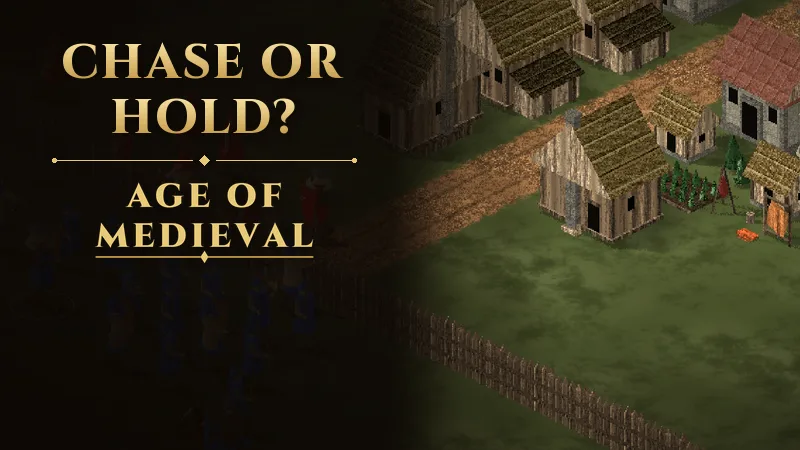
An enemy lord is at your palisade with a ram. Do you hold the wall and wait for relief, or open the gate and meet him in the field?
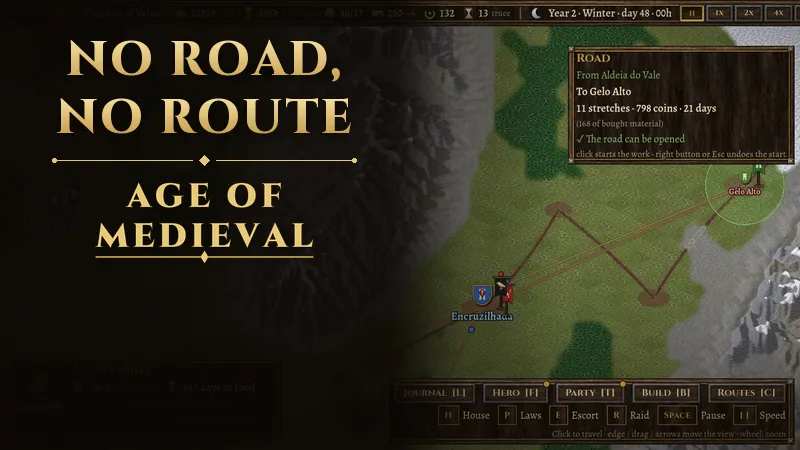
Trade in Age of Medieval runs on roads you build stretch by stretch. You see the cost and the days before you pay, and the market refuses a route with no road.
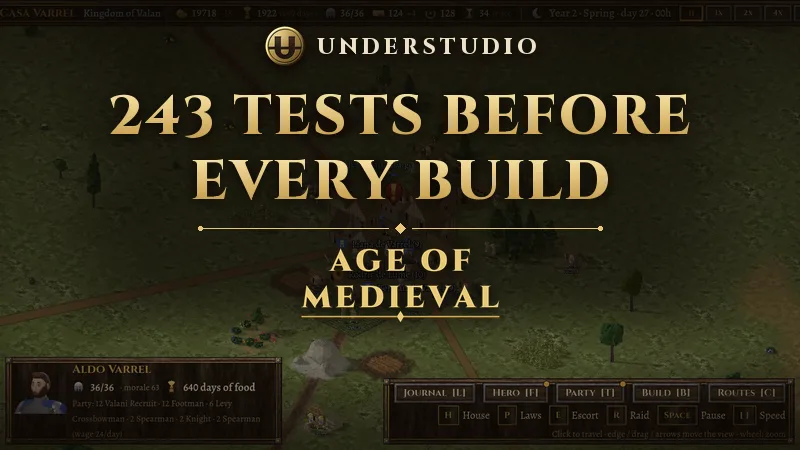
Before we say a build is done, 243 automated probes play pieces of the game for over an hour. How a small studio keeps a large simulation standing.
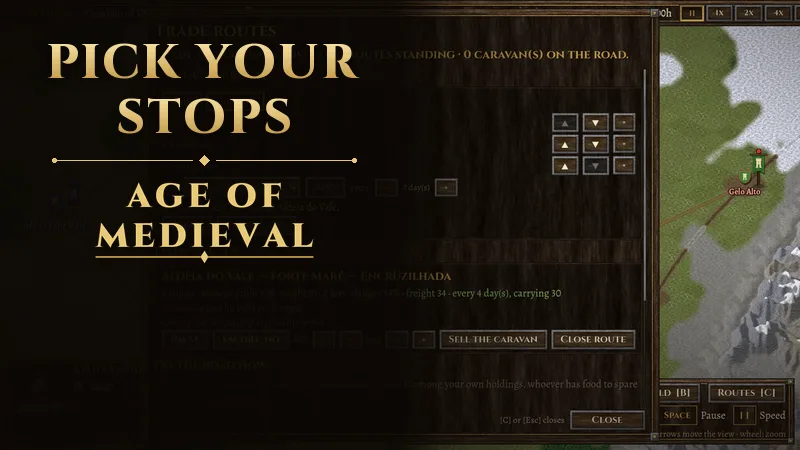
A trade route is a circuit of two to five stops. Your caravan only carries what pays for the trip, and the route screen shows the profit per day.
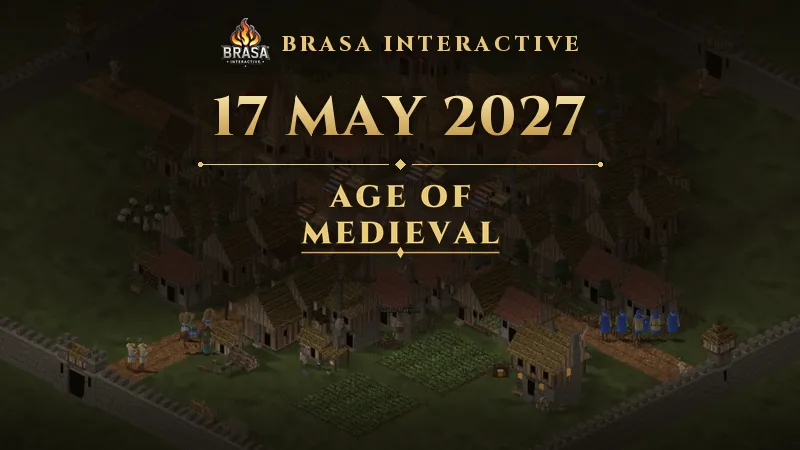
Age of Medieval releases on Monday, 17 May 2027, at US$ 17.99. A short note on how a publisher picks a date and what is fixed already.
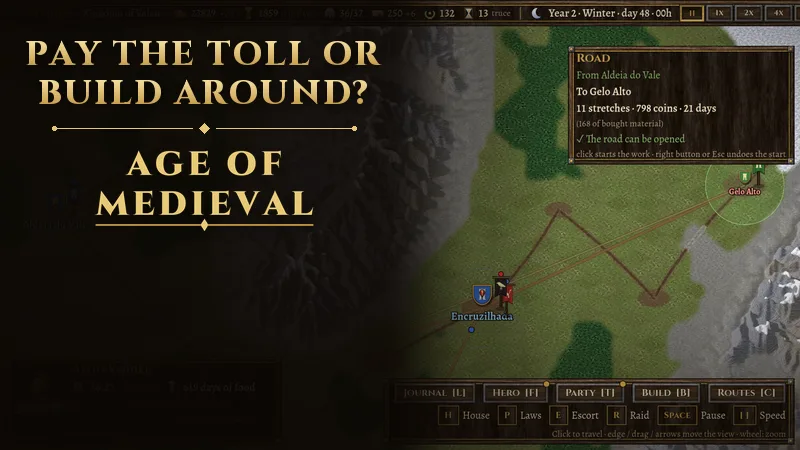
The shortest road to the big market passes a rival's fort, and the fort charges toll. Do you pay, or build your own road around it?
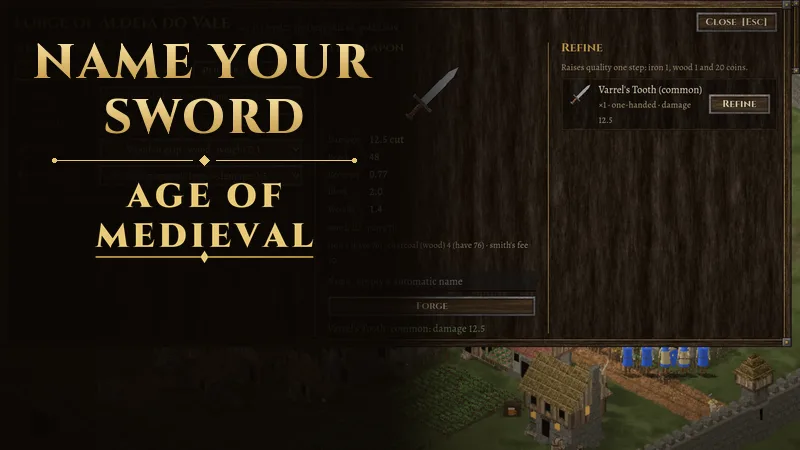
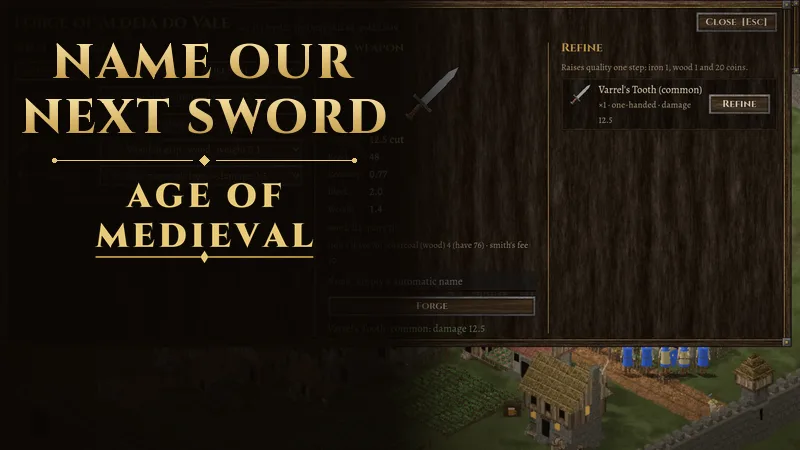
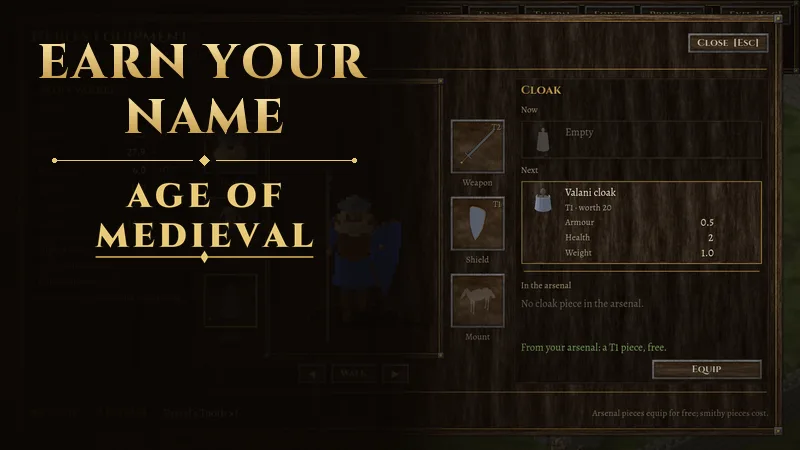
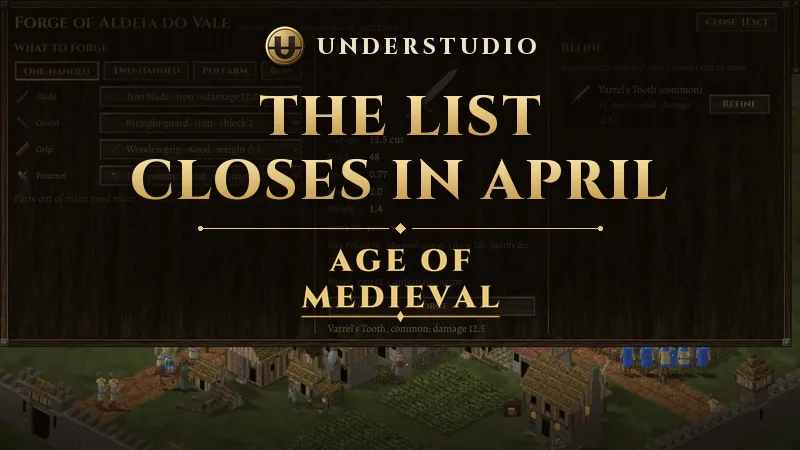
The forge builds a weapon part by part: 30 parts in 10 types. Swap the blade and the damage changes before you pay. Then you name it.
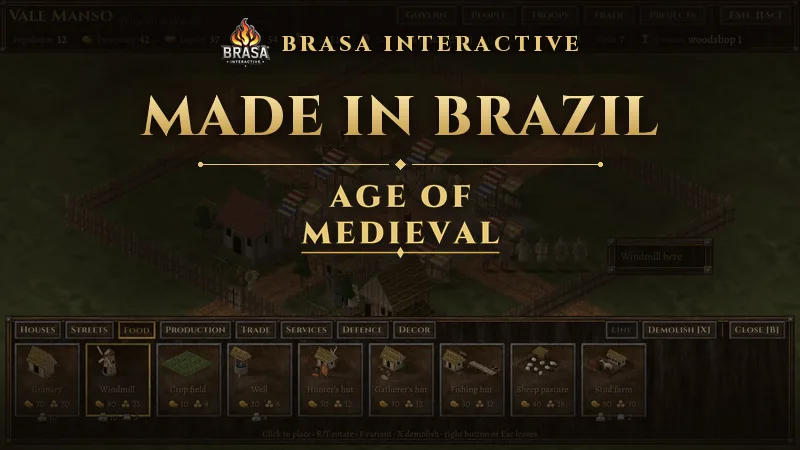
UnderStudio makes Age of Medieval. Brasa Interactive handles the store, the dates and the festivals. A plain account of the split.
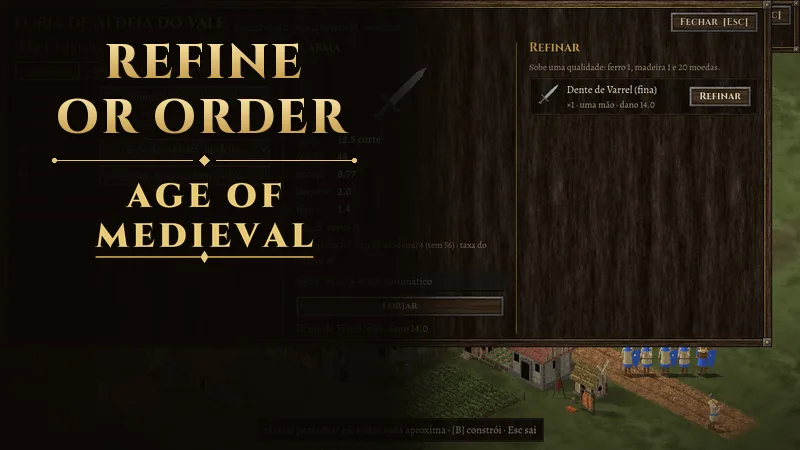
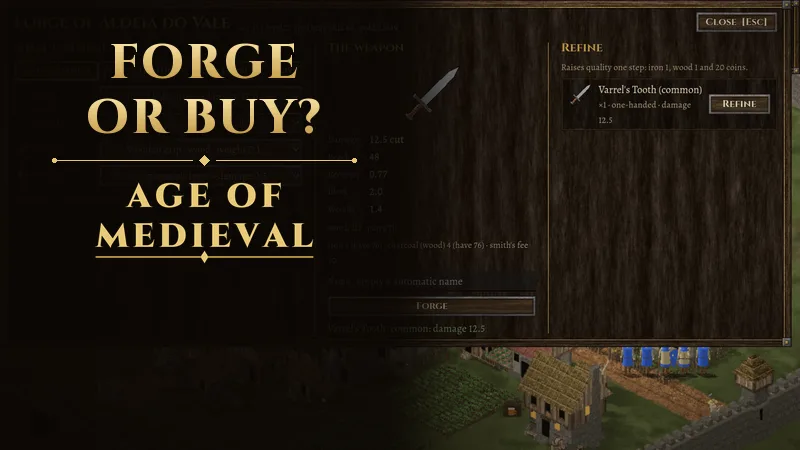
A forged piece can be refined to a higher grade. If your own smith is not good enough yet, order the piece at the smithy of a House seat.
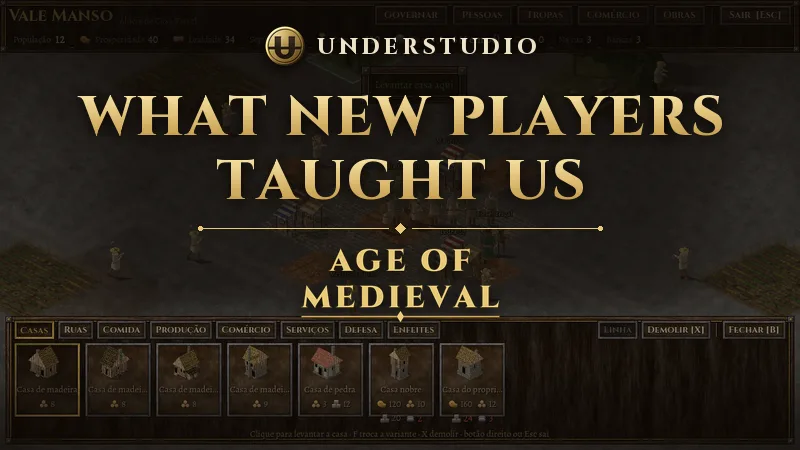
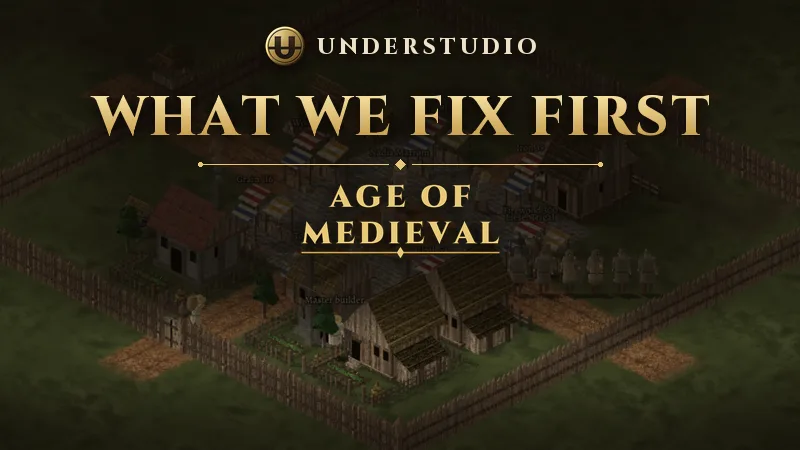
We watched new players go through the first half hour of Age of Medieval. Three things they tripped on, and what changed in the game because of it.
The forge lets you type any name for your weapon. Give us one in the comments: we will forge the best and post the screenshot.
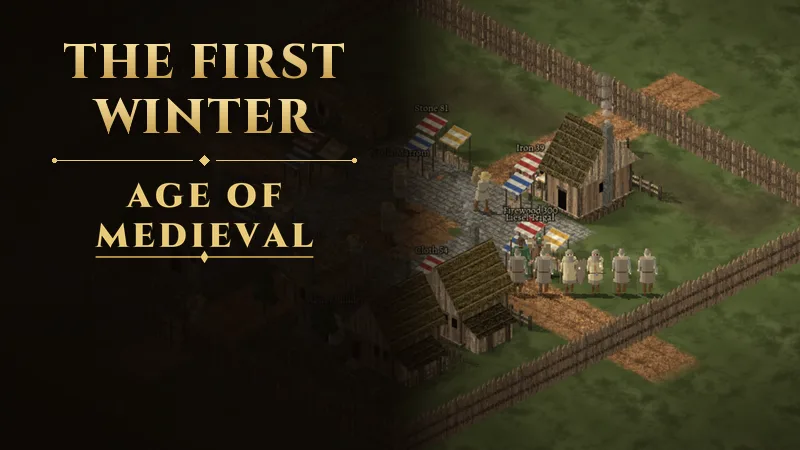
Your villagers eat, burn firewood and wear out clothes every day. What the first winter asks of a new village, and how the game warns you.
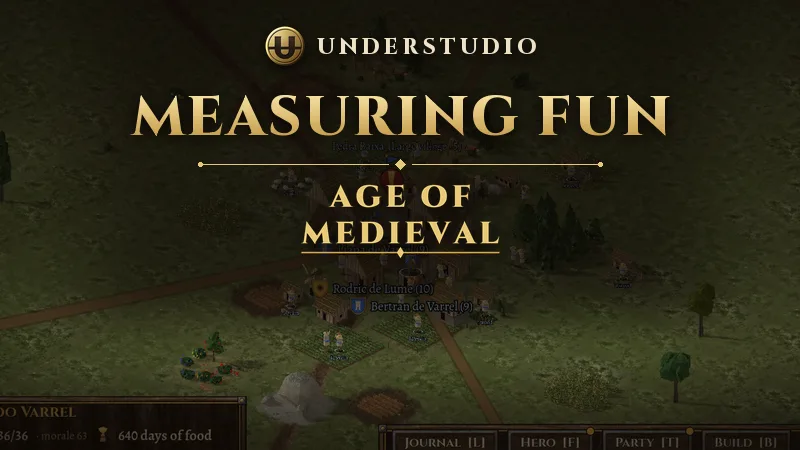
A robot plays a 75-minute campaign and counts two things: decisions per minute and dead minutes. What those numbers told us about our own mid-game.
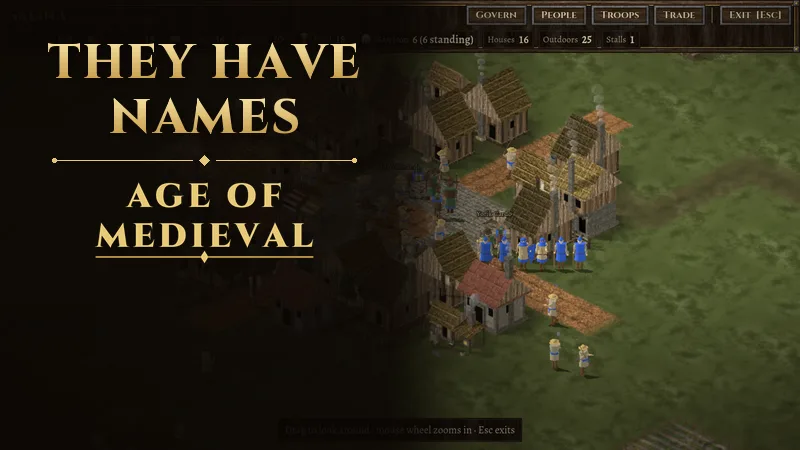
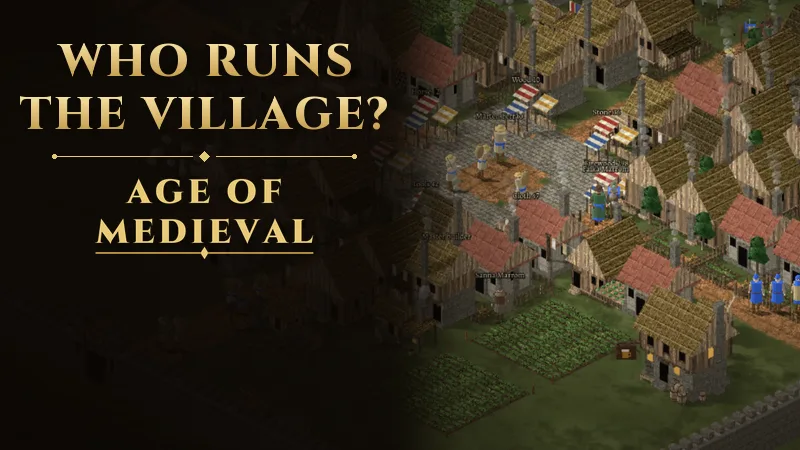
Every villager is a person with a name, a family, a job and a house. Click one to see the sheet; click a house to see who lives there.
Age of Medieval is a single-player Windows game that needs a DirectX 12 capable graphics card. Where to find the full requirements and the content rating.
Cold, hunger, a fire, a raid or your own planning: what ended your first village in a builder game, and what did you do differently the second time?
In a field battle, where a blow lands matters. A hit from the flank does 1.2 times the damage, from behind 1.4. And spears only stop horses from the front.
The Age of Medieval press page at ageofmedieval.com has screenshots, capsule art, logos and the fact sheet, free to use in coverage of the game.
Battle controls work the way strategy players expect: box-select, attack-move, patrol, Shift to queue, stances, and formations for marching or holding off horse.
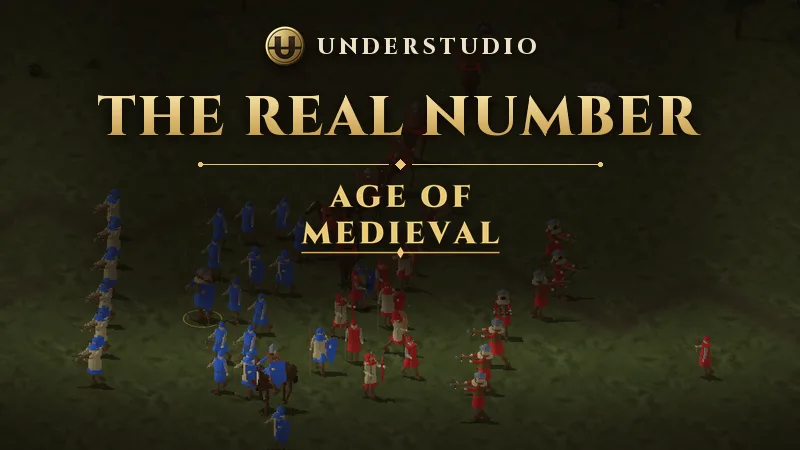
Age of Medieval puts 24 soldiers a side on the field, with the rest arriving in waves. Why the studio says that number out loud instead of a bigger one.
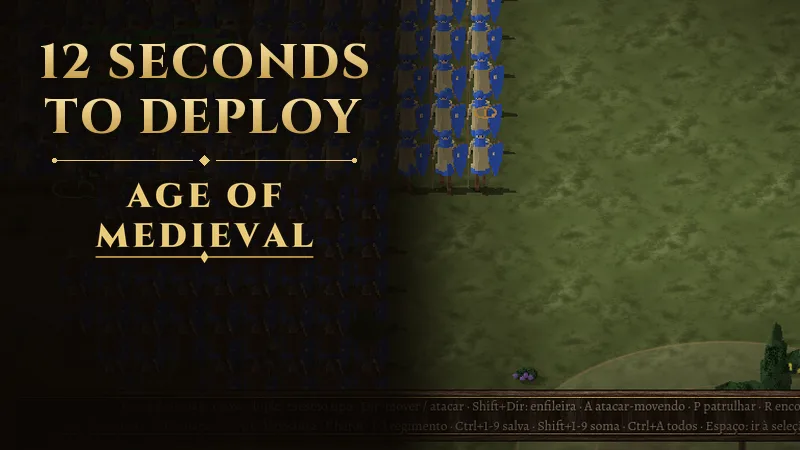
You have spears, archers and a handful of horse, and twelve seconds to place them. Do you hold a line and let them come, or ride around first?
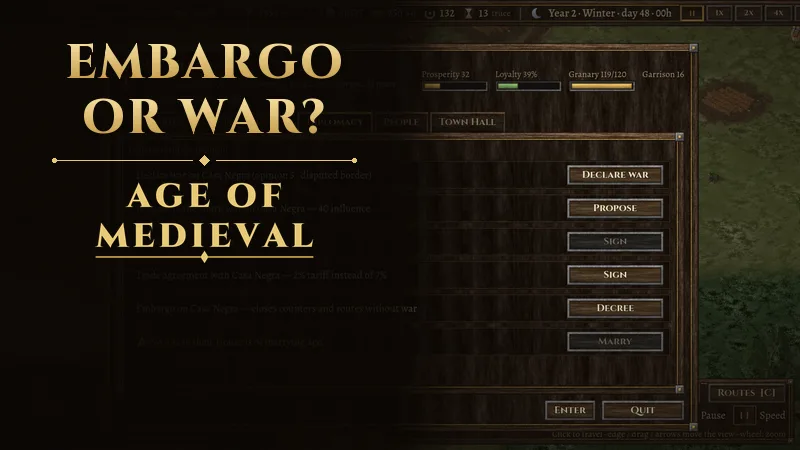
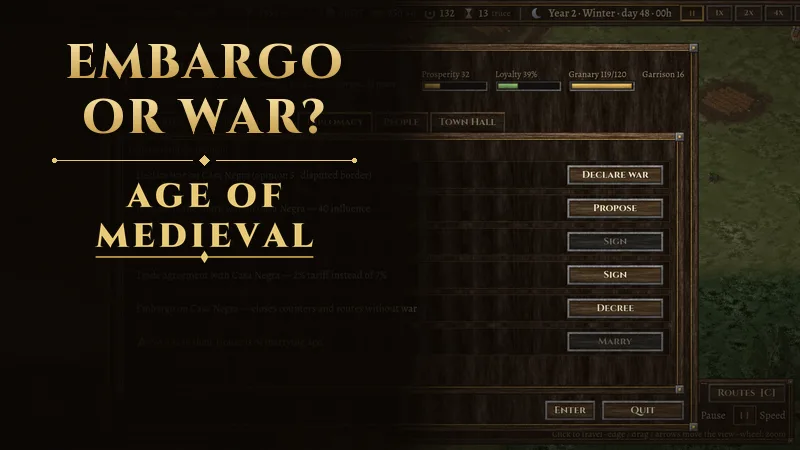
Trade has its own diplomacy. A deal cuts the tariff from 7% to 2%, a hostile House charges 15%, and an embargo closes every stall and route without a war.
When a number in the simulation is wrong, the quick fix is to multiply it. Our first rule forbids that. An example with iron, tools and a three-year test world.
Prices in Age of Medieval follow real spending: firewood in winter, clothes, tools, building works. Eleven goods, each wanted by someone you can point at.
A neighbouring House is selling salt below your price in your best market. Do you sign a deal, close your stalls to him, or march?
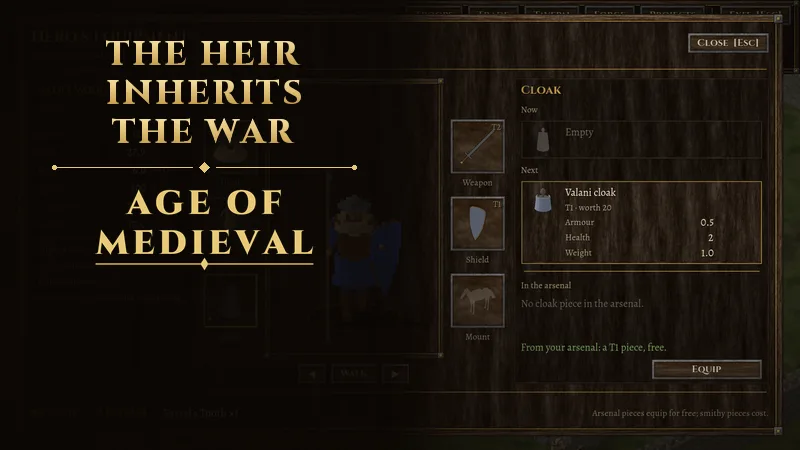
When your lord dies, the House goes on: to the eldest adult child, then the spouse, then a younger relative. Name an heir and someone else is passed over.
Age of Medieval will launch with 21 Steam achievements, in English and Brazilian Portuguese, five manual save slots and three rotating autosaves.
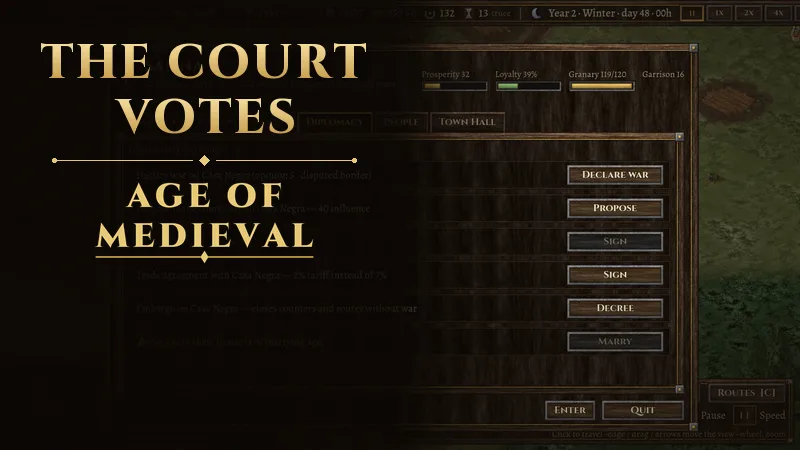
Swear to a king and you sit at his court. War, peace and laws are put to a vote among the Houses, and a vassal's tribute really moves from his coffer to the king's.
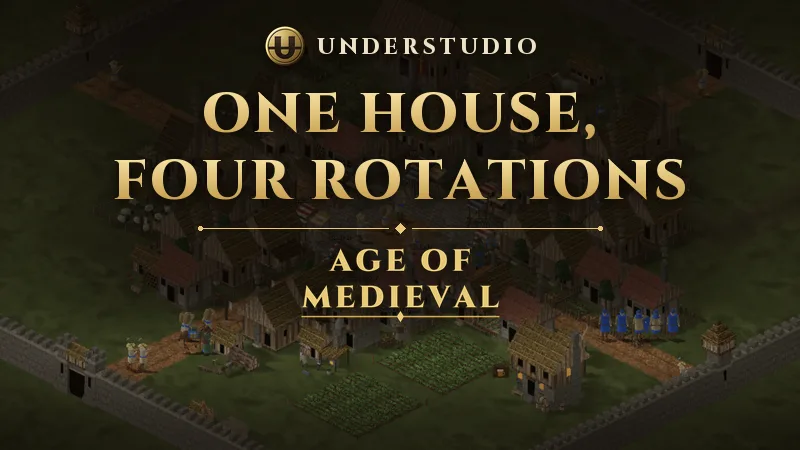
Every building in Age of Medieval is modelled once in Blender and rendered in four rotations for each of the three peoples. A look at the kit.
Your heir is of age. One House offers a strong ally far away; another has a weak lord and the border you want. Which wedding do you hold?
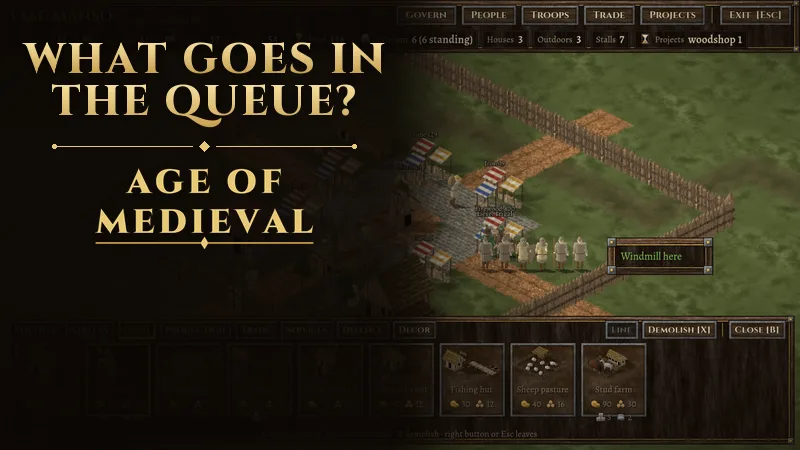
Placing a piece opens a building site. Builders carry timber and stone from the storehouse and raise it over time, and the queue is yours to order.
To check the living world, we run three in-game years with the player standing still and read the ledger: famine, iron, castles, wars, trade.
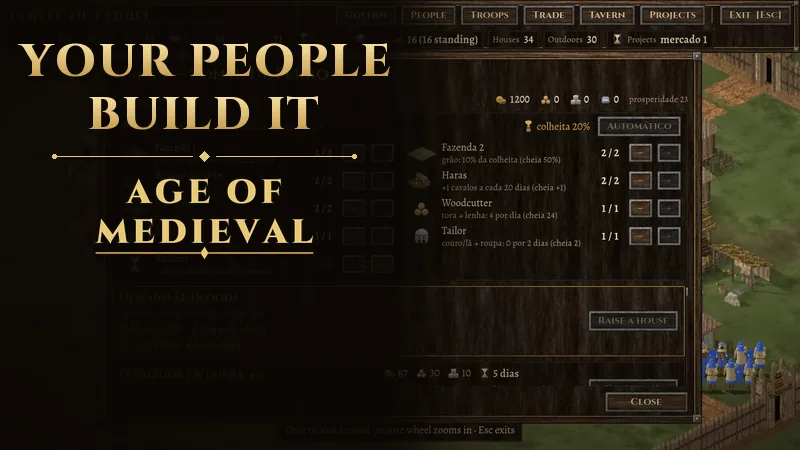
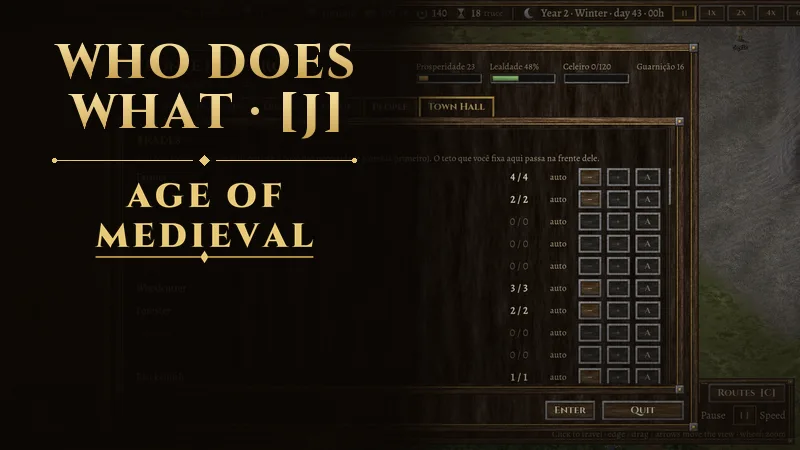
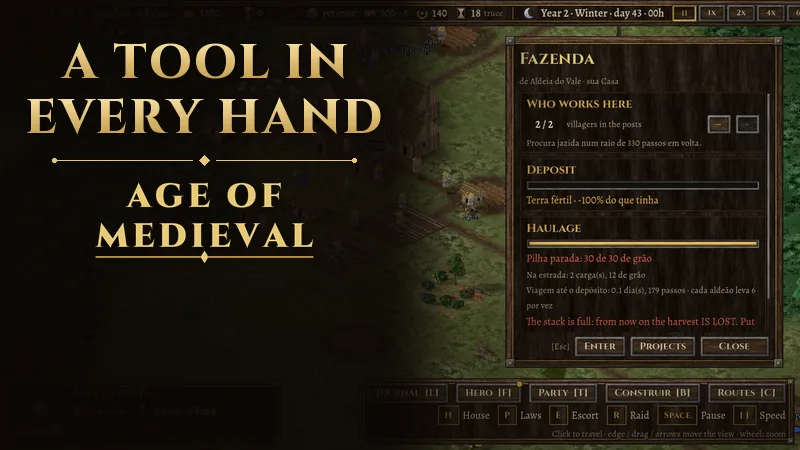
The work panel lists every trade in your village and how many people do it. Move hands between them and set stock limits so nobody piles up what you do not need.
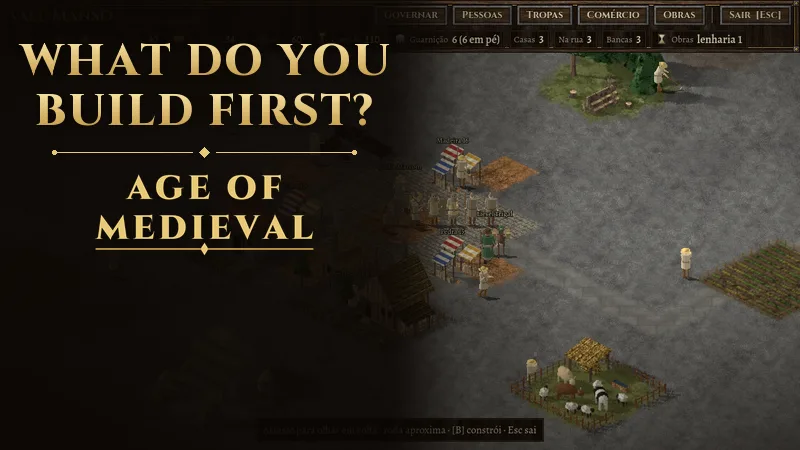
You have just founded. The cart holds enough for three or four buildings before winter. What goes up first, and what waits?
This year the studio gave its engine build a name, built a test battery, and put its first game on Steam as Coming Soon. Thank you for following along.
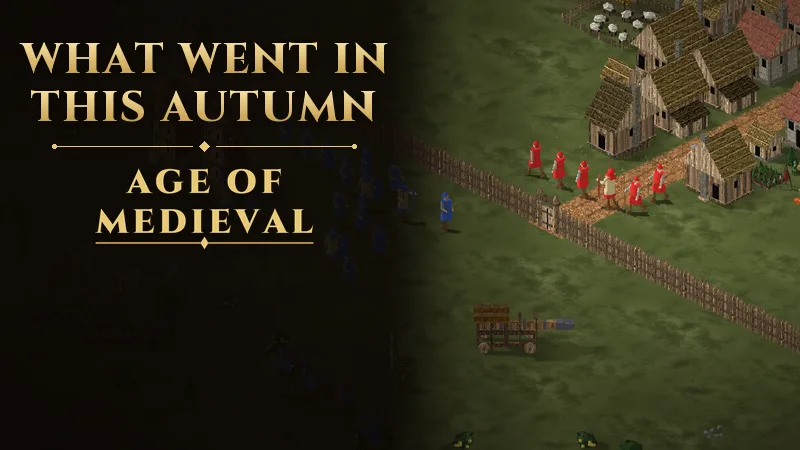
A look back at the last three months of work on Age of Medieval: what is in the game today that was not there when it was announced.
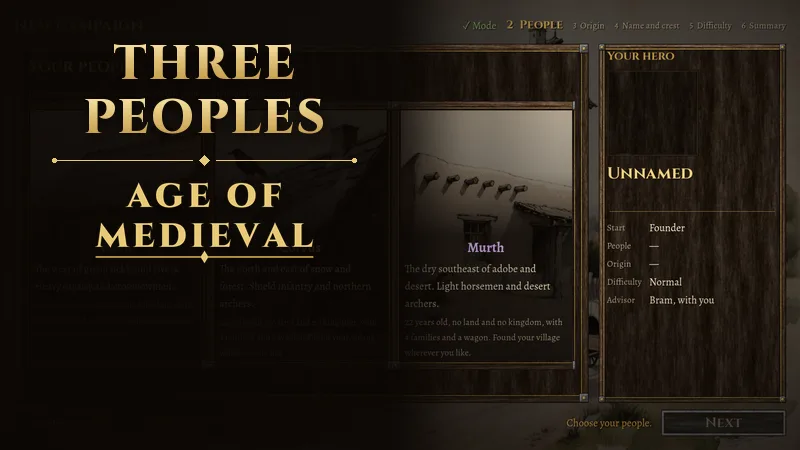
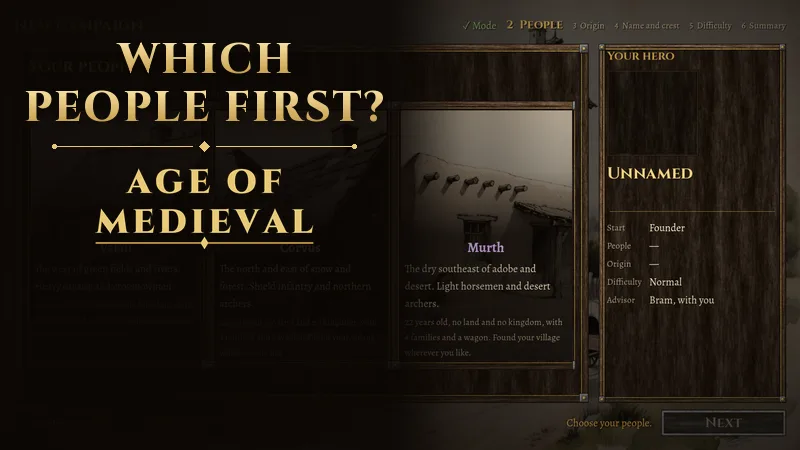
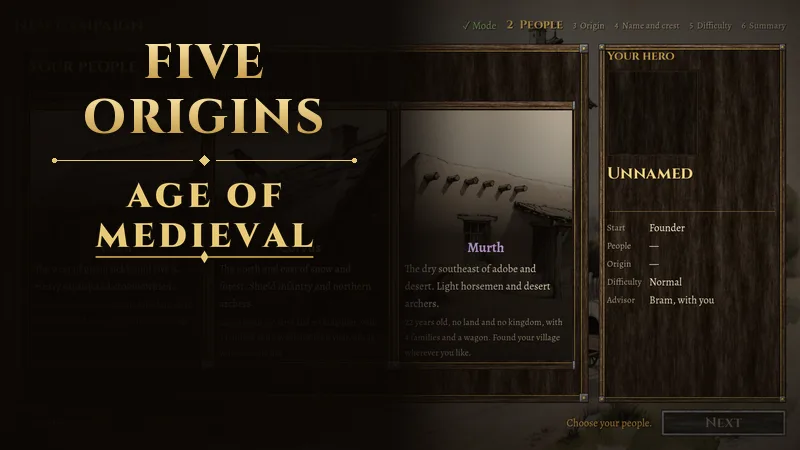
You choose your people when you create your House. Valan build in timber, Corvus in dark stone, Murth in adobe, and it shows in every village on the map.
Timber halls, dark stone keeps or adobe walls: which of the three peoples would you play first, going only by how their villages look?
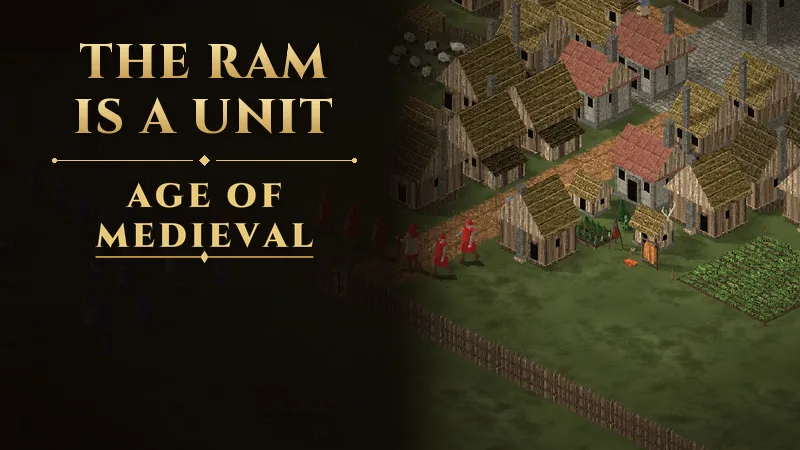
Siege engines in Age of Medieval are units on the battlefield. They are built before the assault, pushed by men, and can be destroyed before they reach the wall.
Making sieges happen inside the real village meant new art for every wall piece, every engine and every villager who runs for shelter. The count.
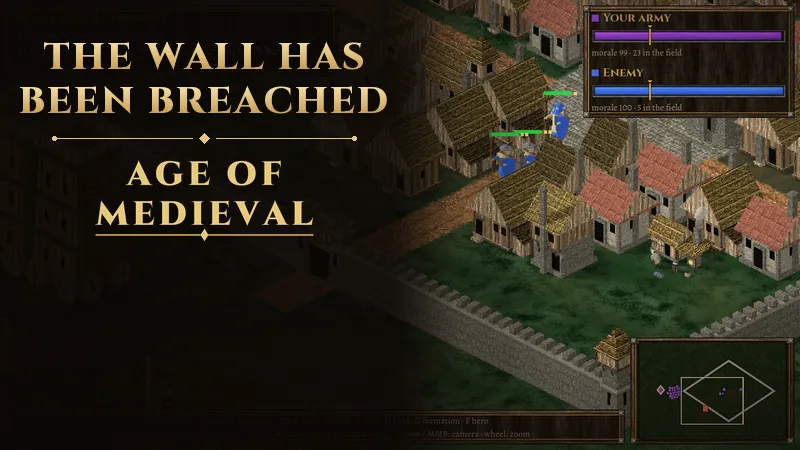
Each stretch of wall has its own health. A trebuchet opens a breach where it hits, the breach stays after the battle, and you or the enemy lord must rebuild it.
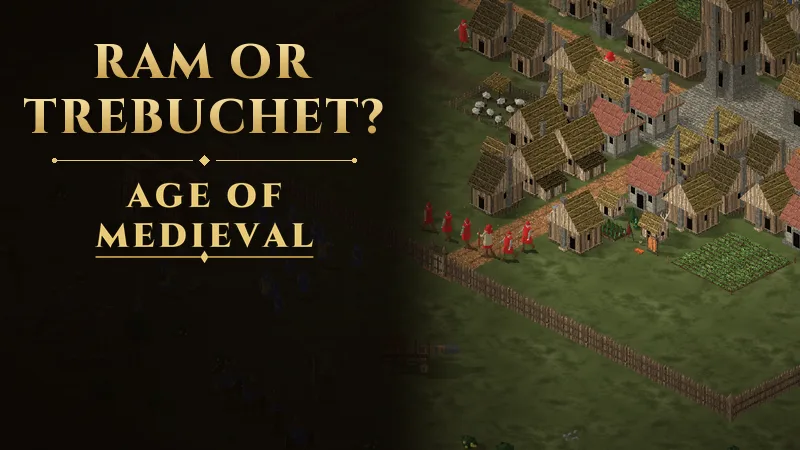
You are outside a walled town with timber for one siege engine. Do you build the ram for the gate, or the trebuchet for the wall?
A siege is not a pause. The granary feeds the village day by day, loads from outside are intercepted, you set the ration, and the enemy may offer terms.
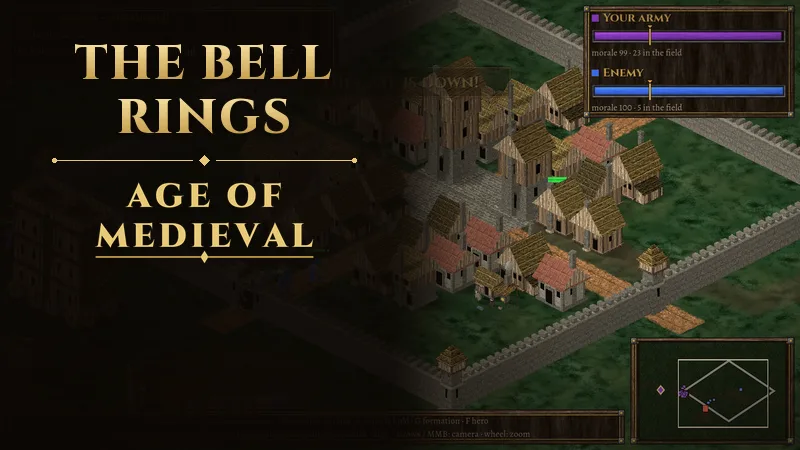
When your village is attacked, the bell rings. Villagers run inside the walls, and the militia are the same people who were farming an hour ago.
Automated tests are not enough to call a build ready. The studio's checklist before anything goes to players, and why "someone else, in a window" is on it.
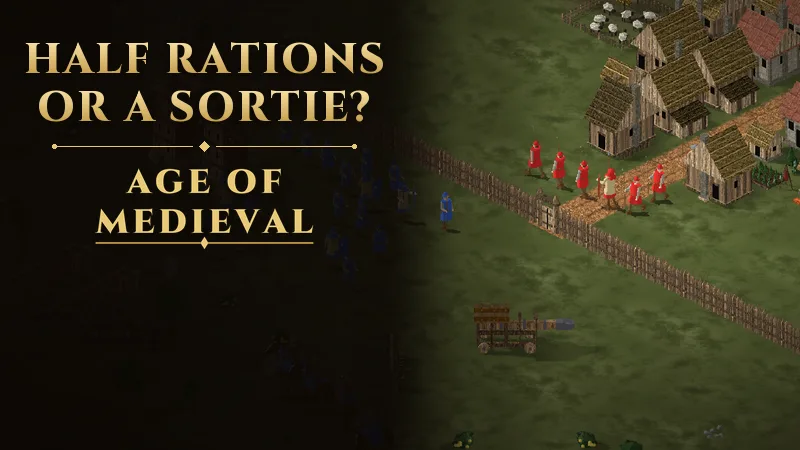
Your village is besieged with nine days of food. Do you cut rations and wait for an ally, or lead the garrison out through the gate?
Fire in Age of Medieval spreads between buildings that stand close together. Villagers fetch water and fight it, and what burns stays burnt until rebuilt.
In a living world, "save and load" is one of the hardest features to get right. The probe that saves, reloads and compares, and the bug it caught.
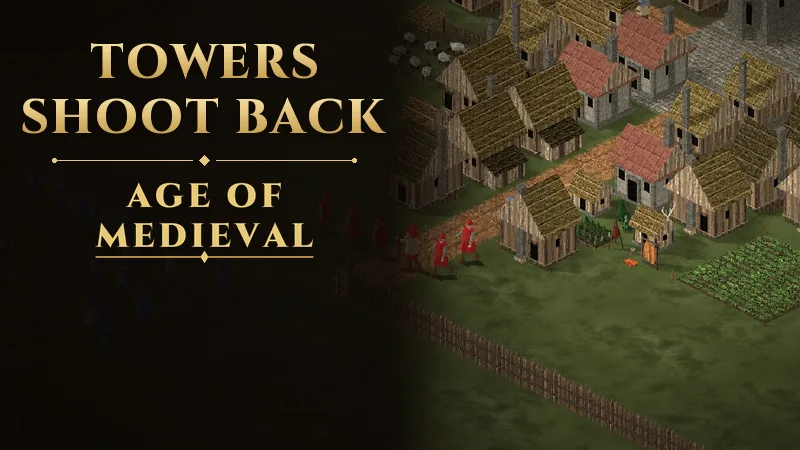
The defences you draw do work in the assault: towers shoot at what comes near, men on the wall-walk are covered, and the gate has oil for whoever leans on it.
The wishlist button gets you the release email. The follow button puts posts like this in your feed. A short guide to the two.
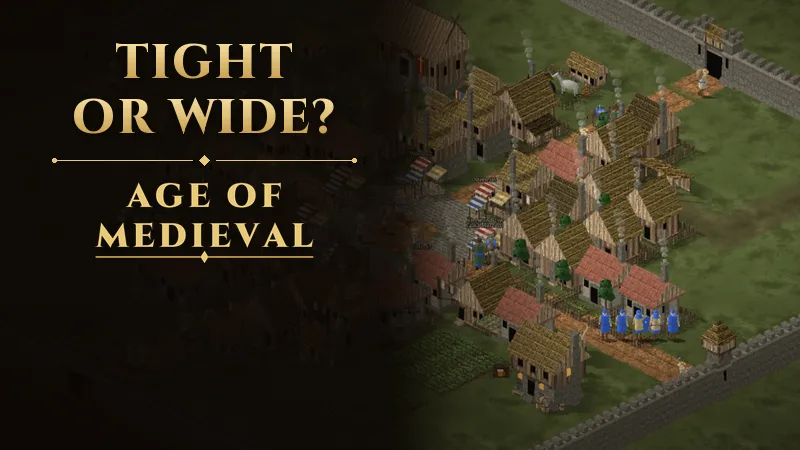
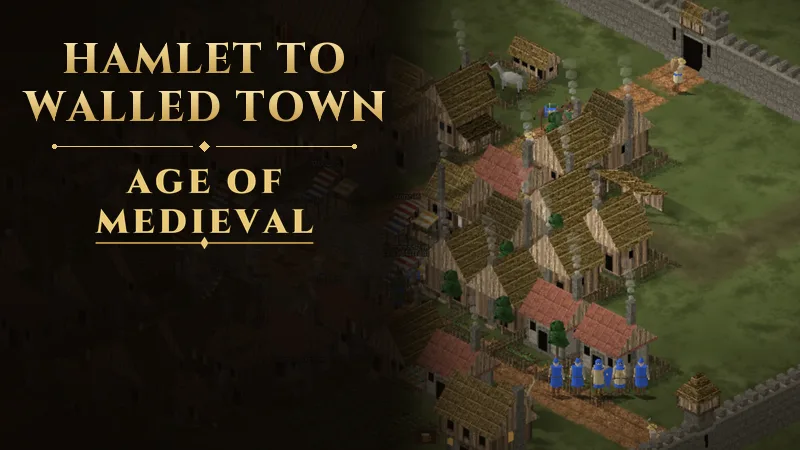
A compact village needs less wall and burns faster. A spread-out one is safer from fire and costs twice the palisade. How do you draw yours?
Honour, valour, mercy, generosity and calculation: every lord has a character, and yours is earned by what you do. Other Houses judge you by it.
Questions, bug reports, translation fixes and ideas for Age of Medieval all have a place: the Steam discussions. How we read them and what helps most.
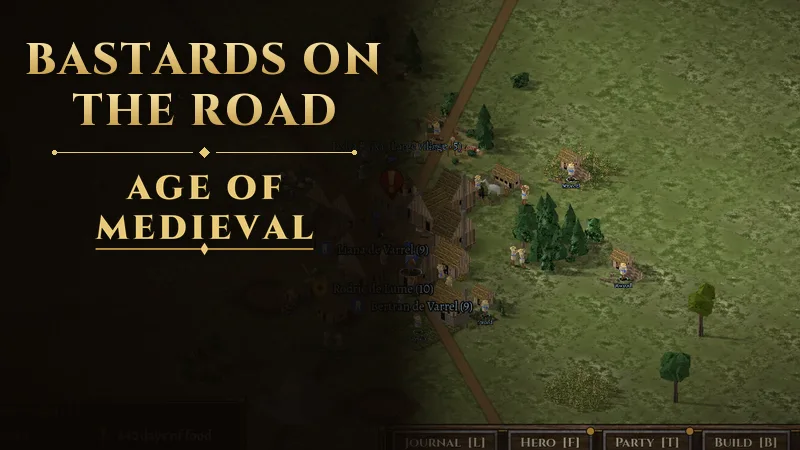
Lords have children outside marriage. They turn up as adults, wander from village to village, and can be met on the road or in a tavern and taken into your service.
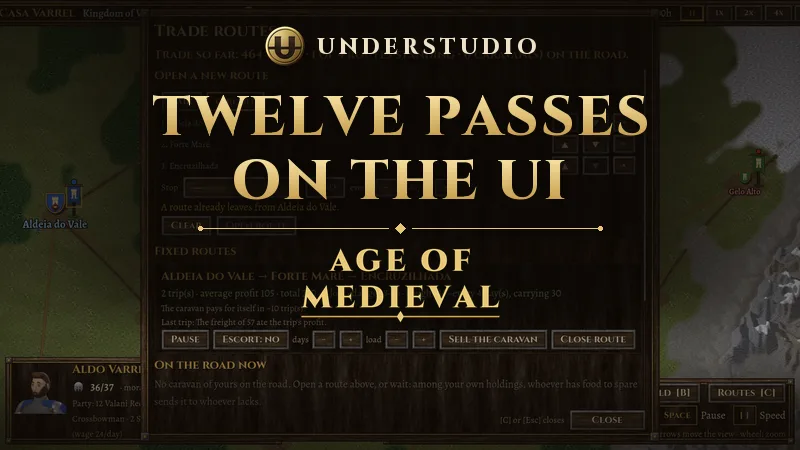
A strategy game is played through its panels. How the studio audited the interface in twelve passes, and the kind of thing each pass fixed.
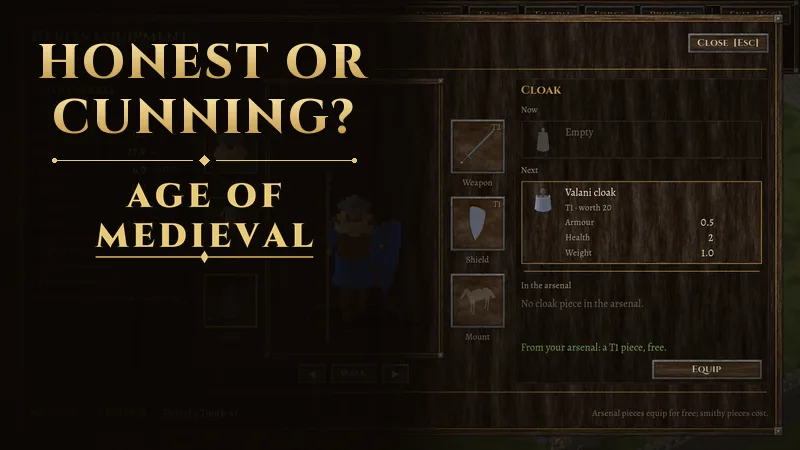
Honourable, Fearless, Compassionate, Magnanimous or Cunning: you can earn any of these names. Which one do you play for, and which do you end up with?
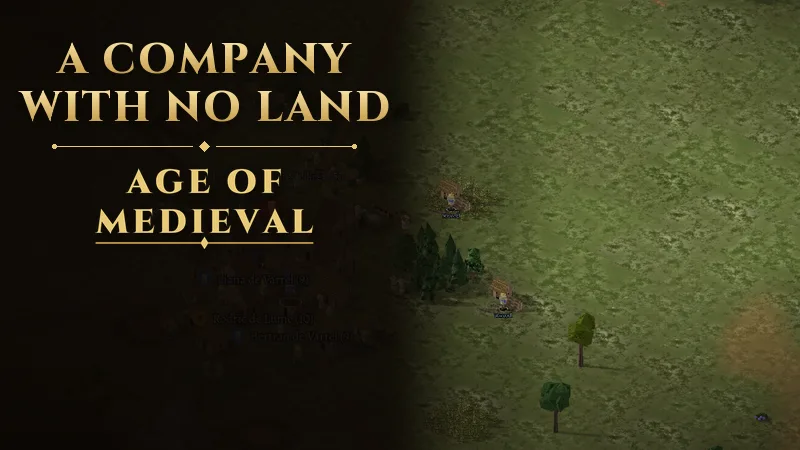
Some of the map's wanderers raise a free company: a House with no land that hunts bandits, recruits, saves up and founds a village of its own.
A small studio's approach to audio: twelve music tracks levelled to the same loudness, a limiter on the master, and a credit for every sound.
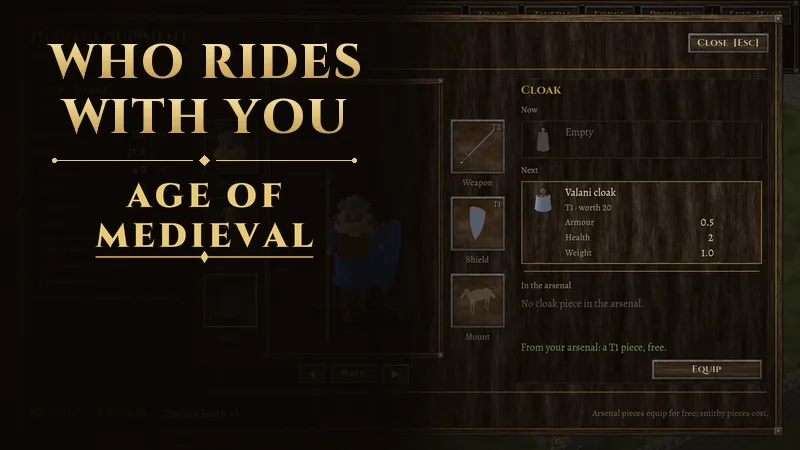
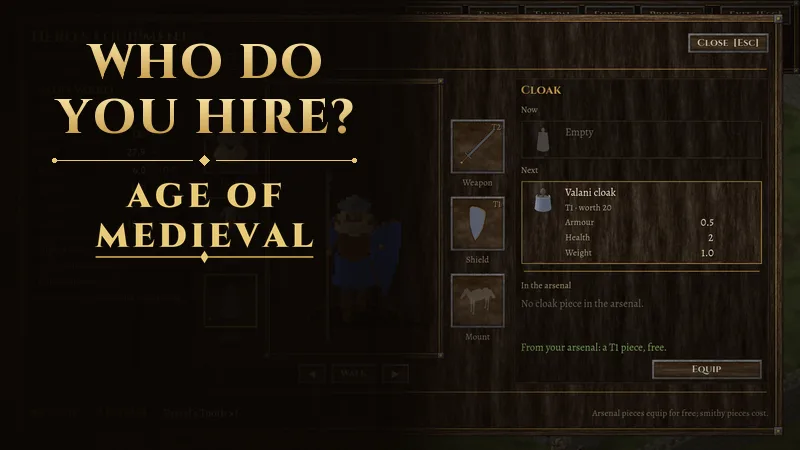
Your lord does not ride alone. Companions hired in taverns or met on the road bring their own skills and gear, and they can be wounded.
Age of Medieval is developed and published in Brazil. Its Portuguese is not translated from English: both are written by the team, side by side.
Two strangers at the tavern want to ride with you: a scarred veteran with no name, and the bastard of a lord you may one day fight. Who gets the place?
Tools in Age of Medieval are objects in your villagers' hands. A worker with one does twice the work, the tool wears down every day, and someone has to forge the next.
Before a Steam page goes public, Valve reviews it. What was on the checklist for Age of Medieval, and how long the review took.
The other Houses read the same prices you do. A high price for iron or stone makes them open a mine or a quarry, and a worked vein goes deeper.
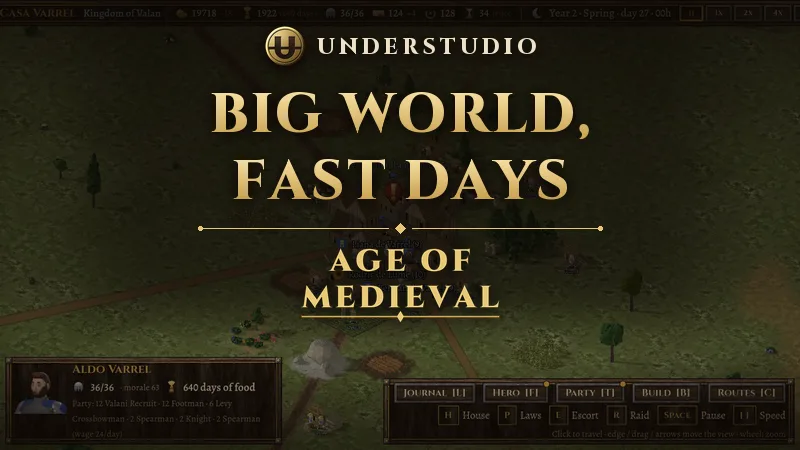
The campaign simulates thousands of villagers and dozens of lords every in-game day. Two tricks that keep that from costing the player a frame.
Your village needs tools every month. Do you open a mine and keep a smith, or buy tools from the neighbour and put those hands in the fields?
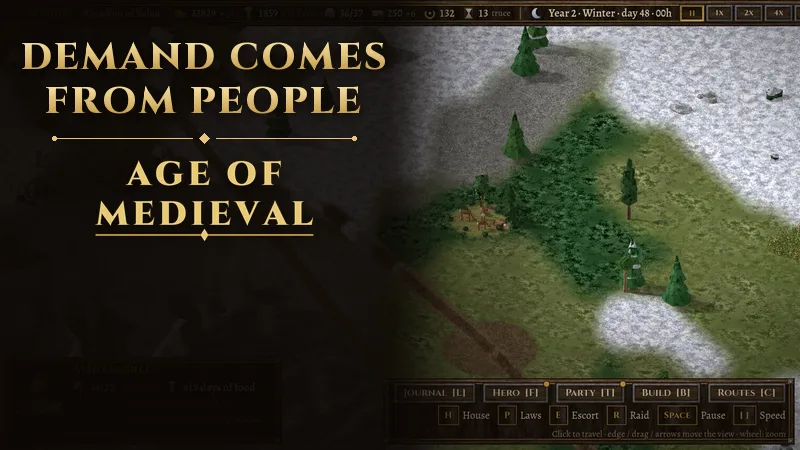
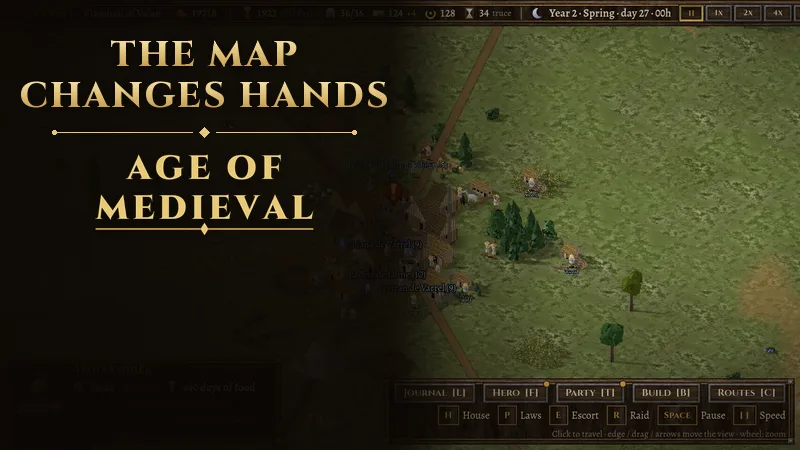
The campaign is one continuous map with shaded relief, rivers, lakes and a coast. Water is terrain: it blocks founding, forces a bridge or a ford, and shapes battles.
Our campaign robot reported a world with no walled towns to besiege. The game was fine. The robot had skipped ninety days without living them.
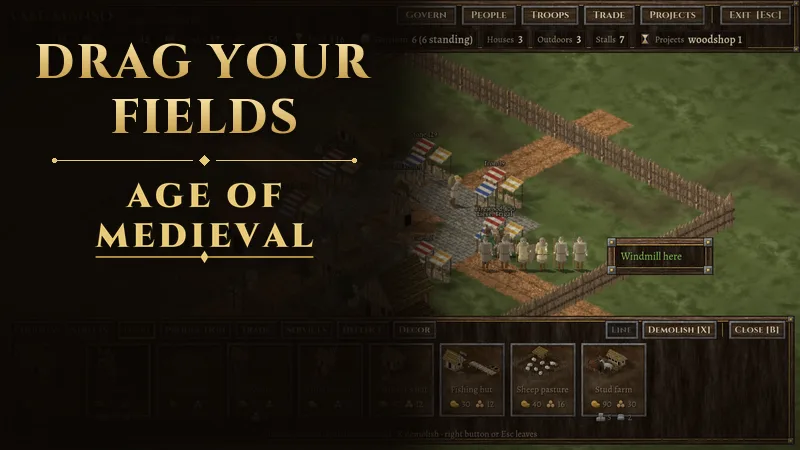
Farmland is an area you drag, from 2x2 to 6x6 cells. The soil decides what it yields, and a bigger field needs more hands to work it.
Tags decide which players are shown a game. How we chose the twenty on the Age of Medieval page, and why the first few matter most.
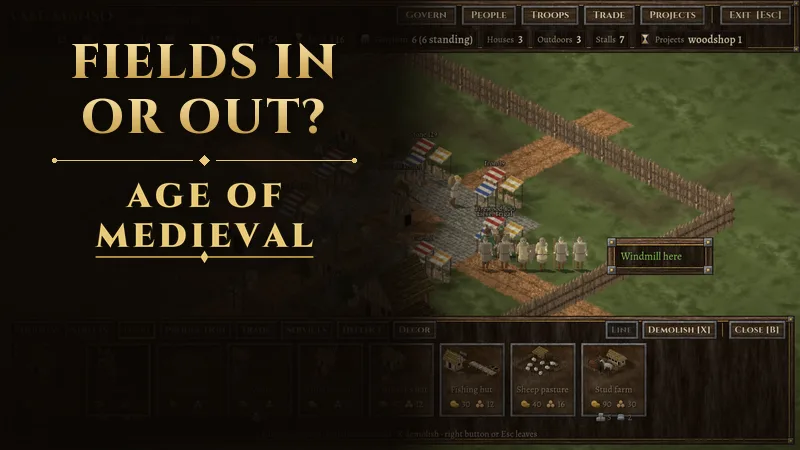
Fields inside the palisade are safe and cost a much longer wall. Fields outside are cheap and are the first thing raiders reach. Where do yours go?
A settlement climbs seven ranks, and none is bought with coins alone: a closed palisade, a keep, a stone wall with towers, a market square.
The date and the price on the Age of Medieval page are set. Screenshots, trailers and text will keep being refreshed as the game changes. What to expect.
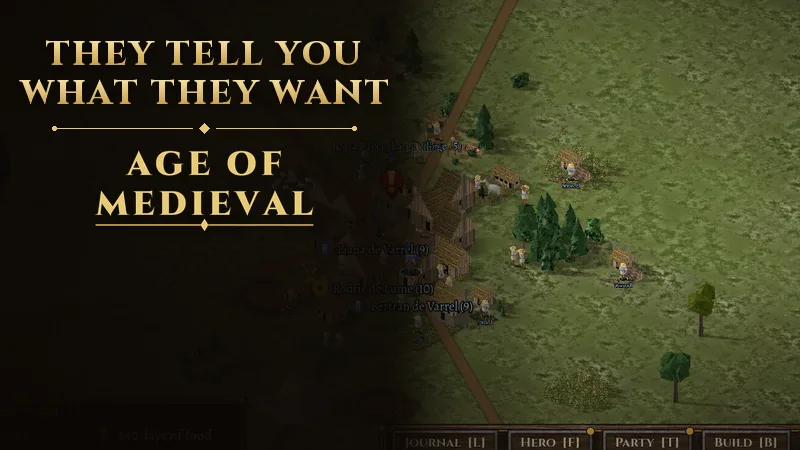
The other lords are not silent. Each party shows where it is going and why, a House sends an ultimatum before a war, and friendly lords ride in with requests.
The siege map is not a separate level. It is generated from the village plan each time, and soldiers find their way through it cell by cell.
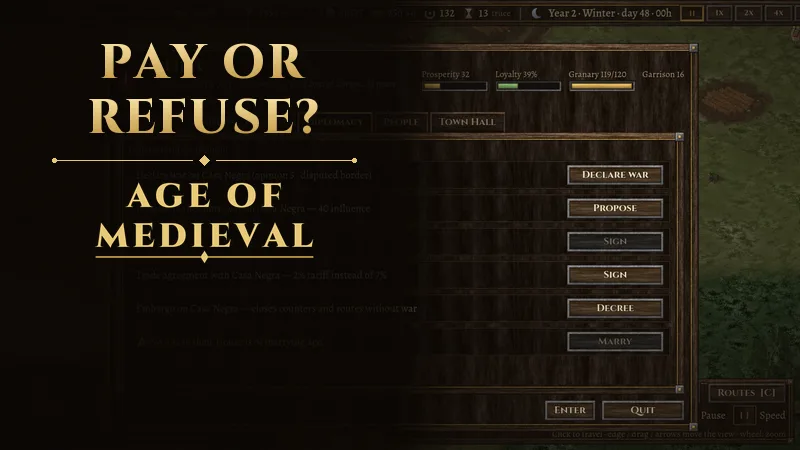
A stronger House sends an ultimatum and gives you three days. Do you pay and buy a season, or refuse and start mending the palisade?
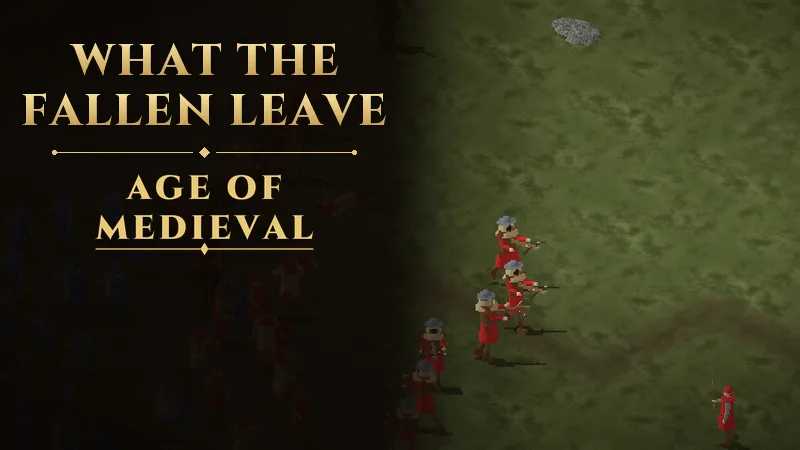
After a battle you see the fallen, the prisoners and the gear left on the field, piece by named piece. You choose what to take.
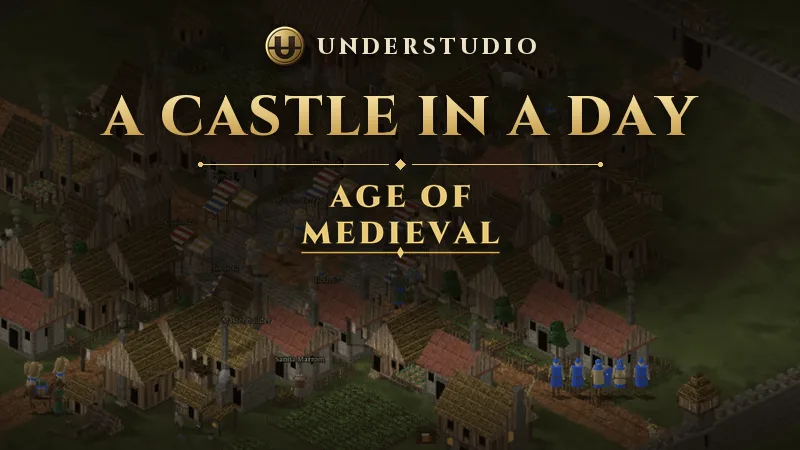
We removed an arbitrary cap on builders, and a castle went up in one day with 79 people on site. What we did instead of putting the cap back.
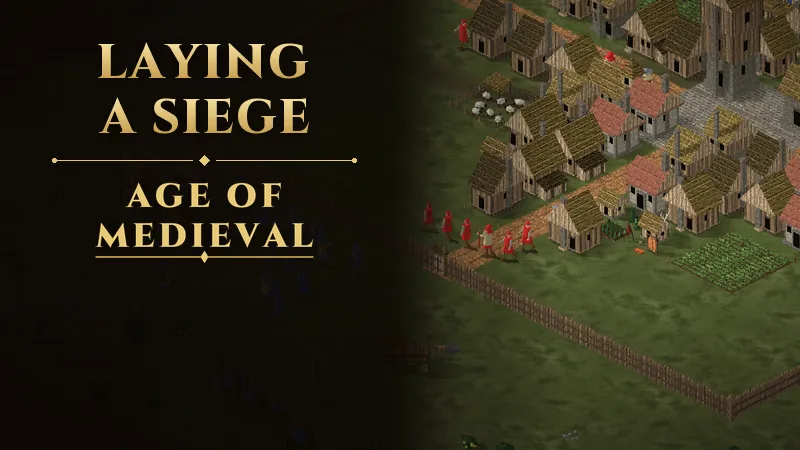
Besieging a town is a string of decisions: how long your food lasts, whether to forage, when to offer terms, and what to do when the garrison rides out.
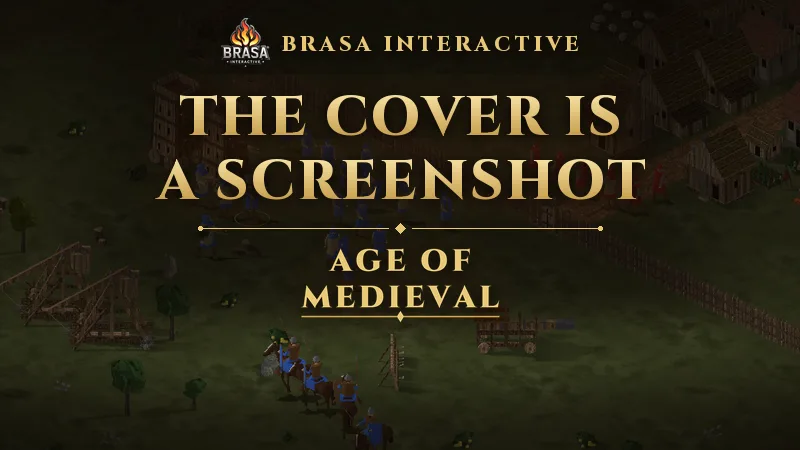
The capsule image of Age of Medieval is built on a real screenshot of a siege. Why we chose the game itself over painted knights.
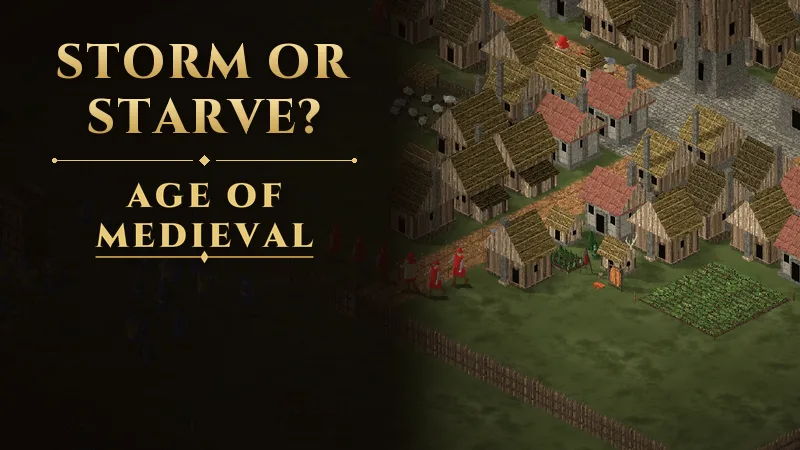
You are besieging a walled town. Your ram is built, your camp has six days of food, and the garrison looks hungry. Storm now, or wait?
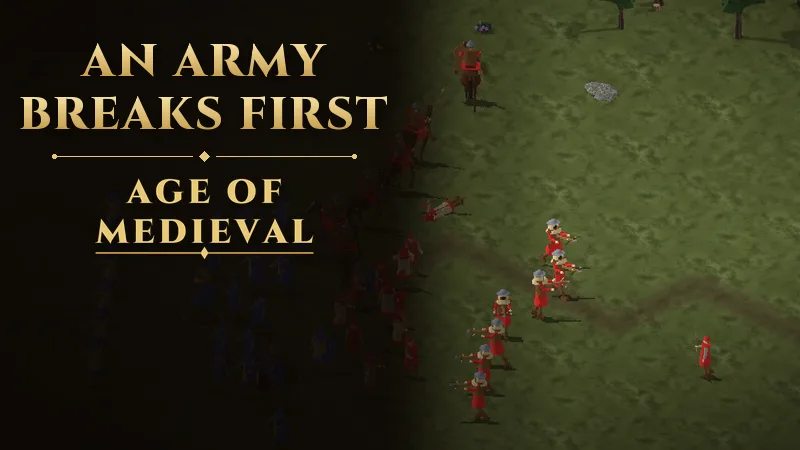
Each side in a battle has a morale bar with a rout mark on it. Losses push it down, a fallen hero knocks a piece off, and a side that crosses the mark runs.
Age of Medieval's interface ships in 18 languages. An automated check fails our build when a sentence reaches the screen without going through the translation table.
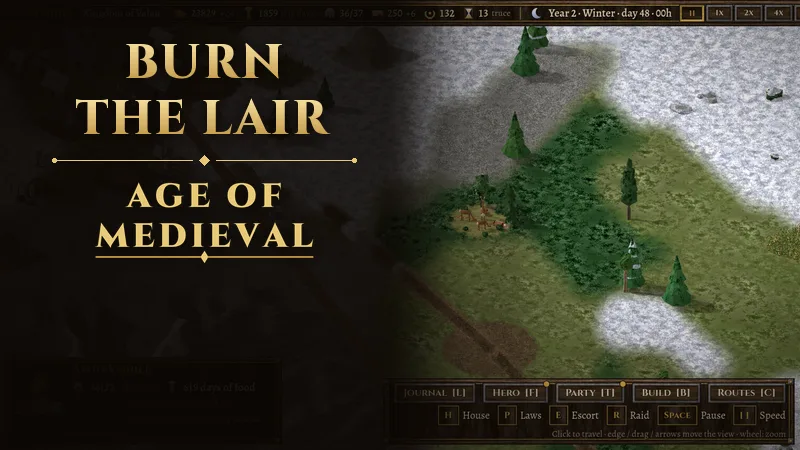
Bandit bands roam the roads, but they come from somewhere: a lair with a fire in front. Destroy the lair and that source dries up.
The enemy line has just broken and is running. Do you send the cavalry after them, or pull your men back into a line before the next wave arrives?
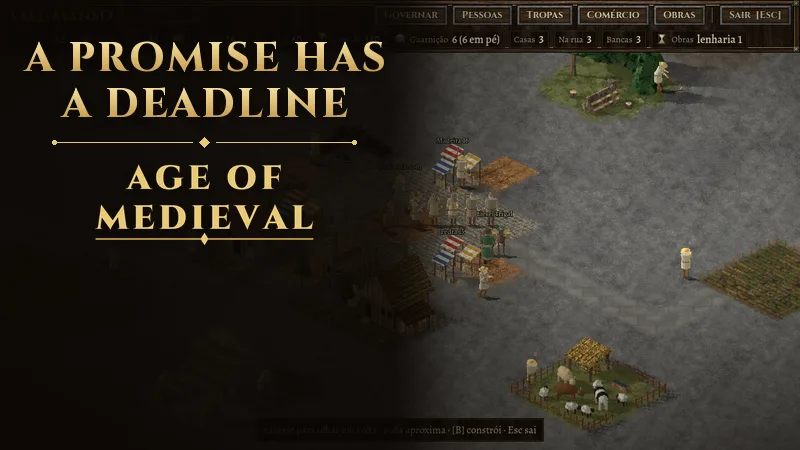
People in Age of Medieval ask you for things, with a deadline and a reward. You may refuse. What you accept and then drop is remembered against you.
Houses in Age of Medieval gather into realms under a crown. A vassal pays tribute out of his own coffer, and the king's coffer is where it arrives.
Each test world of Age of Medieval starts from a numbered seed. The same seed gives the same start, which is what lets us compare a world before and after a change.
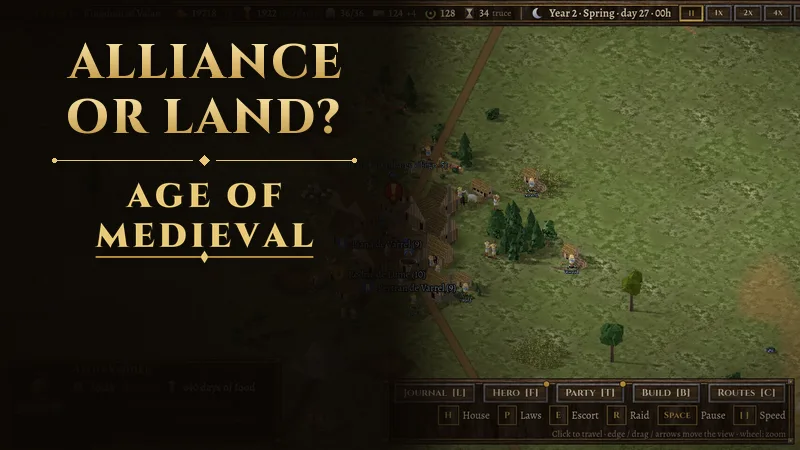
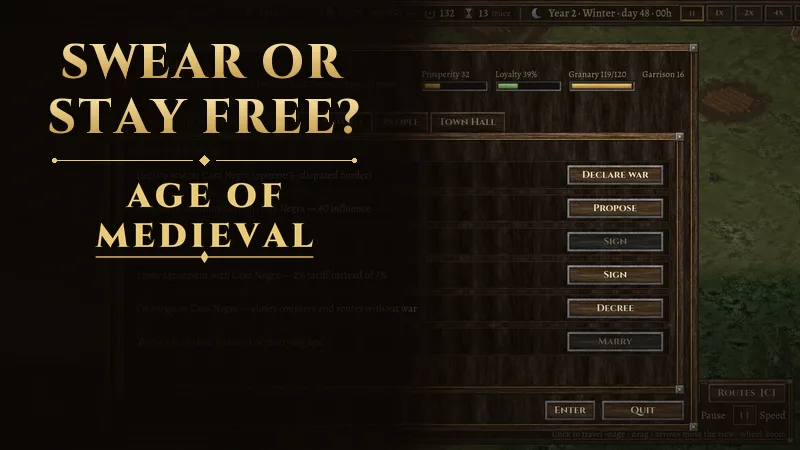
A king offers to take your House as a vassal: his army behind you, his tribute on your coffer. Do you kneel, or keep your gates and your coins your own?
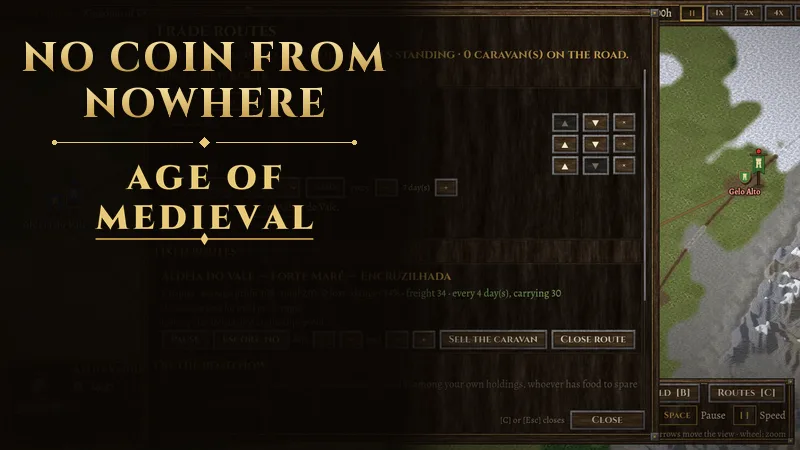
Money in Age of Medieval moves, it is not minted by events. Plunder comes out of the coffer of the place you sacked, and what you pay for material stays in the world.
What we need to reproduce a problem in Age of Medieval: what you were doing, what you expected, and what happened. A short guide.
Two Houses can fight on their own, or drag their crowns in. Castles change hands without the player, and a three-year world ends with a different map.
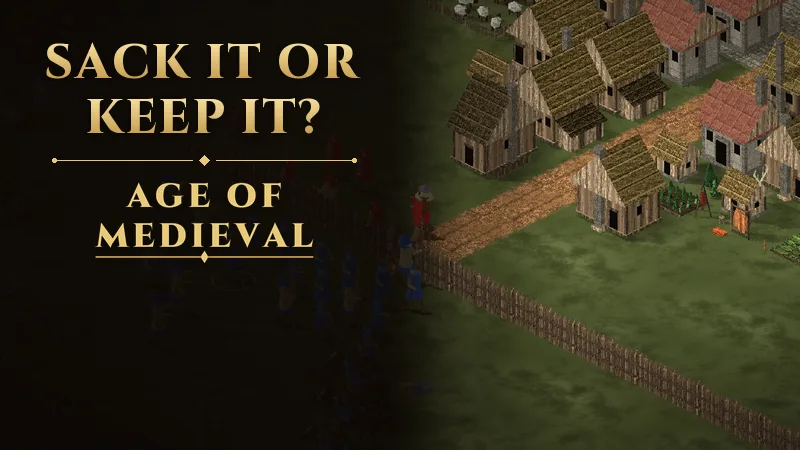
You have beaten the garrison of an enemy village. Its coffer is full. Do you empty it and ride home, or take the place and inherit its problems?
You cannot be in your village and on campaign at once. A governor keeps the building sites moving, and the queue you left is the plan he follows.
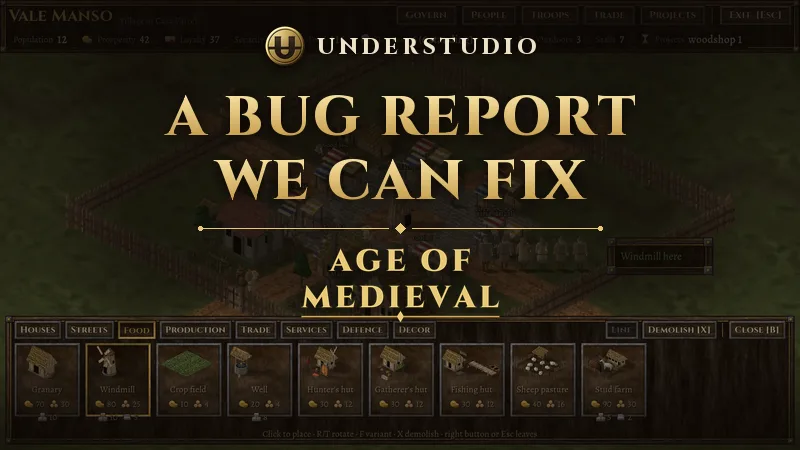
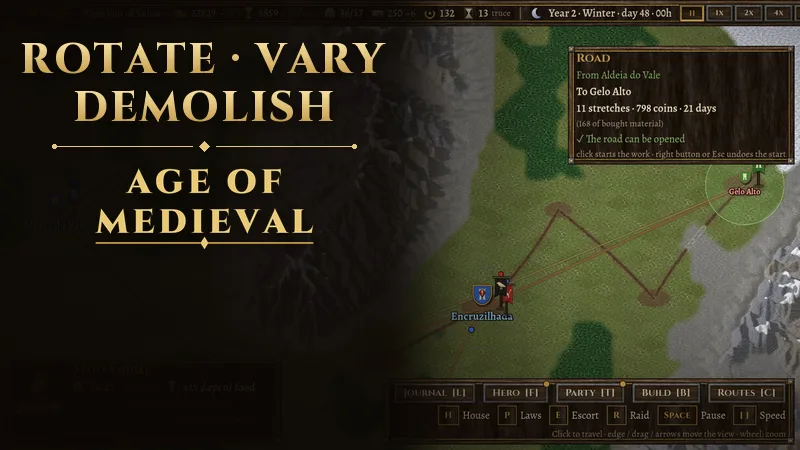
Beyond streets and walls, the builder lets you rotate a piece, pick among variants of the same house and demolish what no longer fits.
Seven weeks before release, UnderStudio stops adding systems to Age of Medieval. What a feature freeze is, and why it is good news for players.
You are leaving on campaign for a month and can queue three works for the village. Stone wall, granary, forge, more houses: which three?
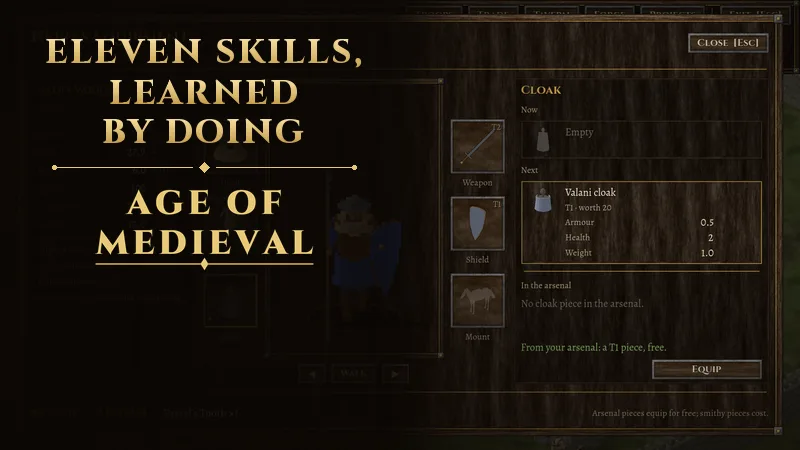
Your hero has eleven skills, from Combat to Smithing. Each rises when you do the thing, and at two milestones it offers two perks and you keep one.
With seven weeks left, not everything on the list gets fixed. The order UnderStudio uses to decide, from lost saves down to a crooked label.
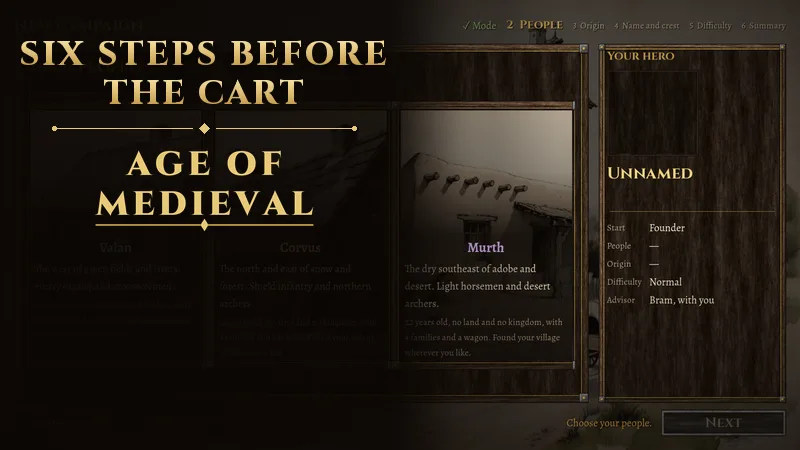
A campaign starts with six short steps: choose a people and an origin, name your hero and your House, pick a portrait and a coat of arms, set the difficulty.
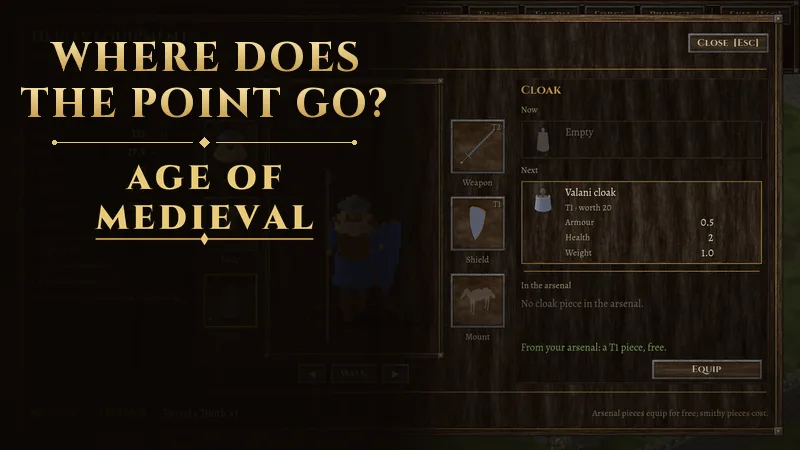
Your hero has just gained a level and one focus point. Combat, Trade, Leadership, Engineering, Smithing: which skill gets it first?
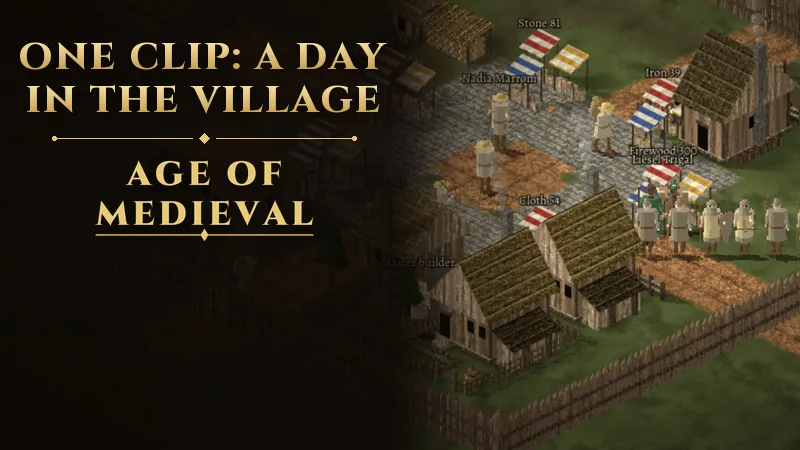
A few seconds of an Age of Medieval village, taken apart: who is carrying what, why that house is smoking, and where the cart is going.
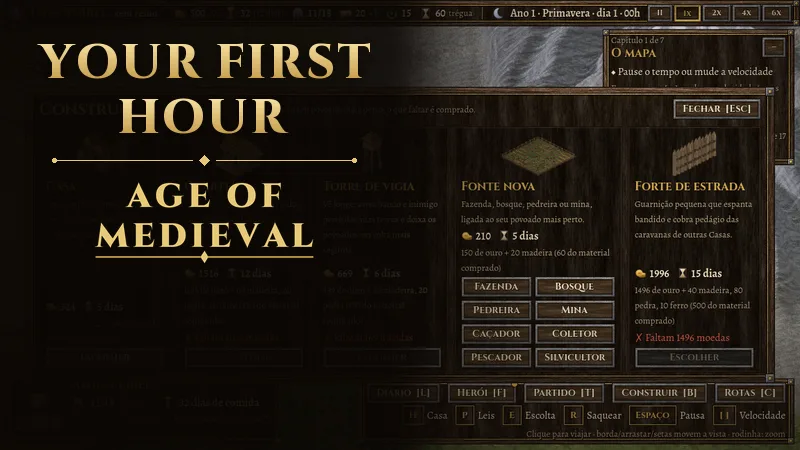
What the first hour of an Age of Medieval campaign looks like: find ground, found, house your people, open a market, make a first trade, and get ready for winter.
Age of Medieval releases for Windows. A small studio's reason: every build passes the whole test battery on the system it ships for.
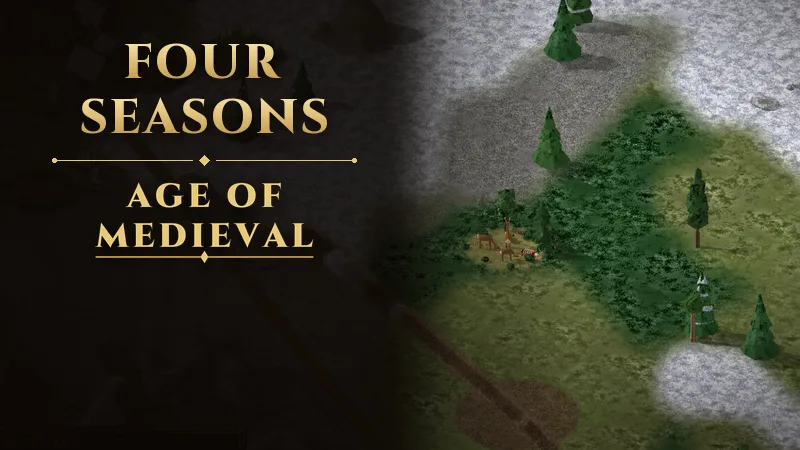
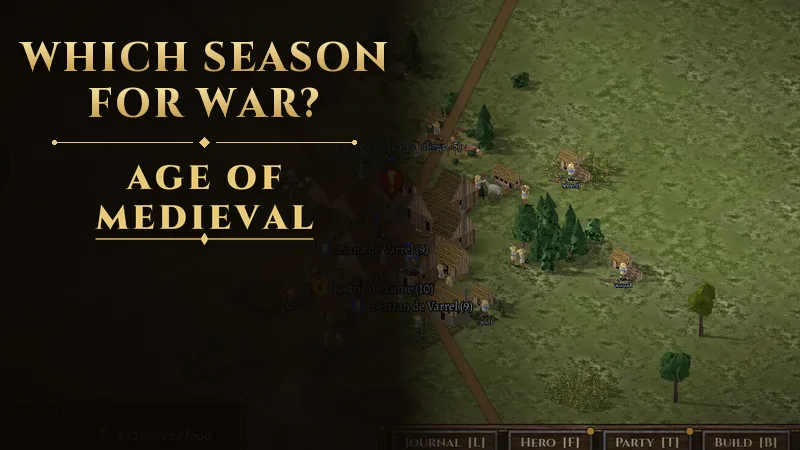
A year in Age of Medieval has four seasons, and they matter: planting and marching in spring, harvest and stocking in autumn, firewood and waiting in winter.
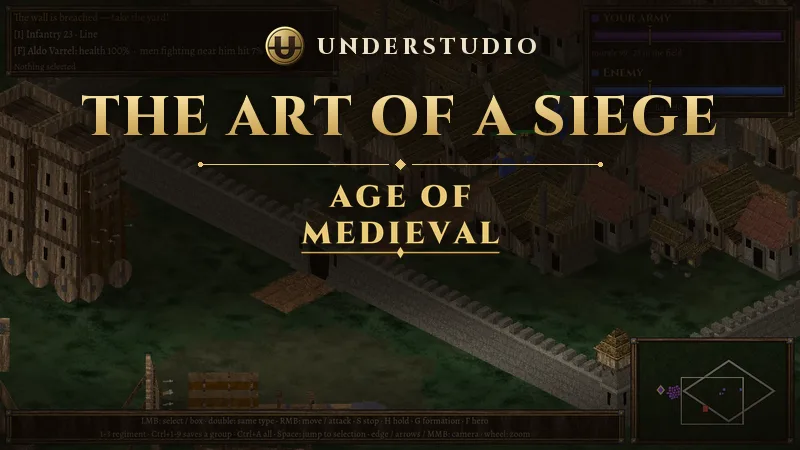
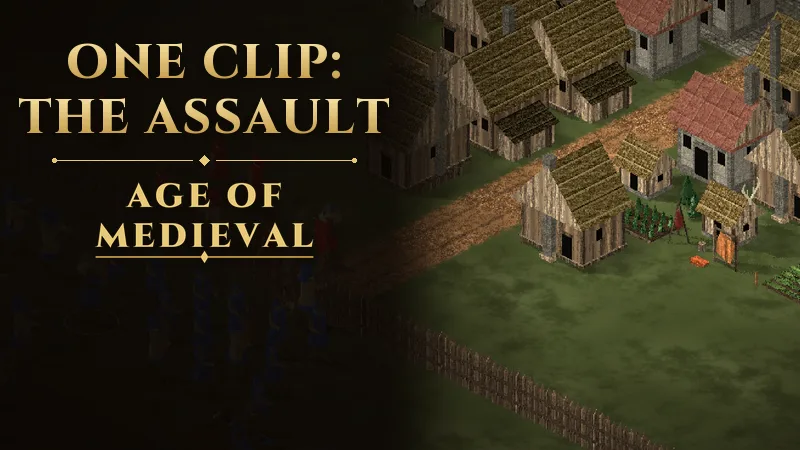
A few seconds of an Age of Medieval siege, taken apart: the engines, the wall, the gate, and the street behind it that the attackers have never seen.
Spring gives you the whole year to campaign. Autumn finds the enemy's granary full. Winter finds him cold, and you too. When do you march?
Your hero's origin decides his starting skills, his gold and who rides with him. The five origins of Age of Medieval and the opening each one gives you.
Age of Medieval has three difficulties. They change your gold, how much your troops suffer and how the other Houses treat you. The world's rules stay the same.
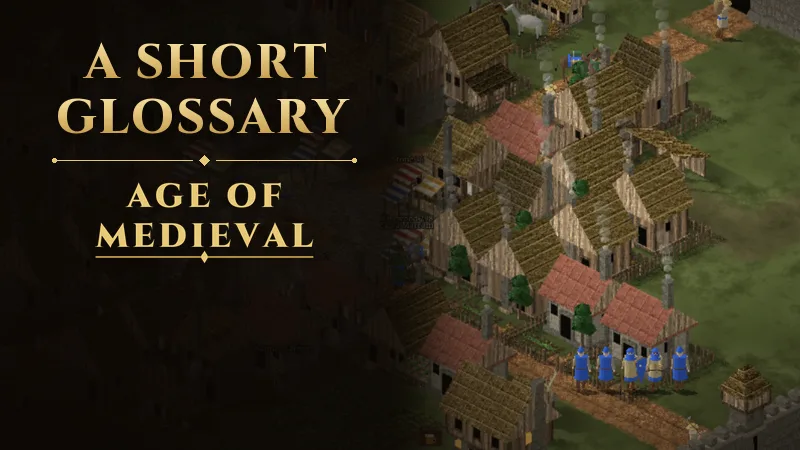
House, seat, rank, building site, party, wave, source, realm: eight words Age of Medieval uses constantly, each in two lines.
Easy gives more gold and calmer neighbours. Normal is the world as it is. Hard gives less gold and Houses that come for you. Which will your first campaign be?
The wishlist is open. The game releases on 17 May 2027, at US$ 17.99.
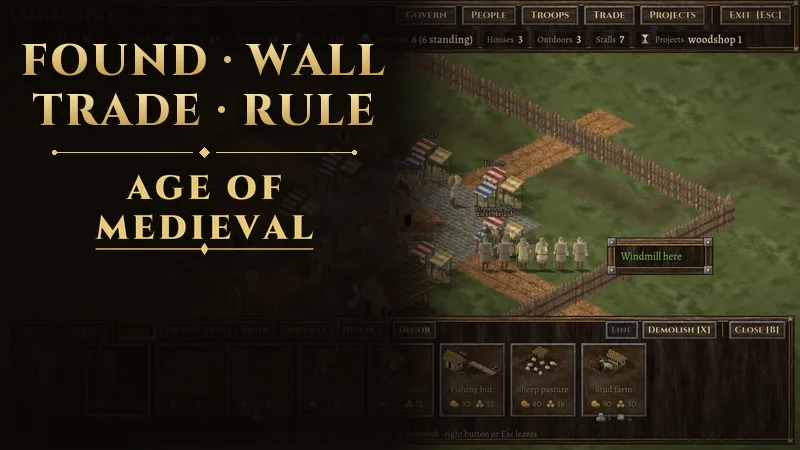
Found a village, lay it out street by street, and defend it in battles and sieges fought inside the towns you built.
Who we are, what we are making, how we work, and what comes next on the road to the Age of Medieval store page.
Our next release: a medieval strategy game where the town you build is the town you defend.